No tool can reliably tell you whether a piece of text was written by AI, but invisible watermarks and signed provenance records can help in specific cases where the creator took part. The confusion comes from three different technologies sold under one idea: statistical detectors that guess, watermarks that the generator embeds, and Content Credentials that record where a file came from. Below, seven common myths about them are checked against the research and the vendors’ own documentation.
Myth 1: AI detectors can reliably spot AI-written text
Detectors guess from statistical patterns, and the guesses are often wrong. OpenAI launched its own text classifier in early 2023 and said it correctly flagged only 26 percent of AI-written text as “likely AI-written” while wrongly labeling 9 percent of human-written text, and later withdrew the tool because of its low accuracy. A detector that misses most AI text and accuses some humans is not a basis for decisions about people.
Myth 2: If a detector says “human”, the text is human
A clean result proves little. The Stanford study “GPT detectors are biased against non-native English writers” showed that simple prompting strategies can help AI-written text bypass detectors, so a person who wants to hide AI use can often do it. The reverse also happens: a detector’s “human” verdict can be a miss, not a confirmation.
Myth 3: Detectors are neutral and treat every writer the same
They are not. The same study found that several widely used detectors consistently misclassified writing by non-native English speakers as AI-generated, while accurately identifying native writers’ samples. The authors suggest that detectors may unintentionally penalize writers with limited linguistic range. This is why schools and employers should not discipline anyone on a detector score alone; our guide to vetting AI study tools suggests process-based rules instead.
Myth 4: Watermarks make all AI text identifiable
A watermark works only when the generating system adds one, and only its owner’s detector can read it. Google DeepMind’s SynthID adjusts the probability scores a language model uses when choosing each next word, in a way that is not noticeable to readers, and the Nature paper describing SynthID-Text says the scheme preserved text quality in a live test on nearly 20 million Gemini responses. That is valuable for text from Gemini. It says nothing about text from a model that does not watermark, an open-weight model running locally, or a human.
Watermarks also have limits. Statistical text watermarks need enough words to build a signal, and thorough rewriting or translation can weaken them. They are a way to label your own model’s output, not a universal lie detector.
Myth 5: Watermarks on images and video are easy to remove
Vendors design them to be hard to remove by ordinary edits. Google says its SynthID watermark in images and video is designed to stand up to cropping, filters, changed frame rates and lossy compression, and that audio watermarks survive noise, MP3 compression and speed changes. “Designed to” is not “cannot be”, and determined attackers or heavy regeneration may defeat any scheme, so treat a missing watermark as inconclusive. What a watermark can offer is a positive signal: if the detector finds one, that is strong evidence the content came from that provider’s tools.
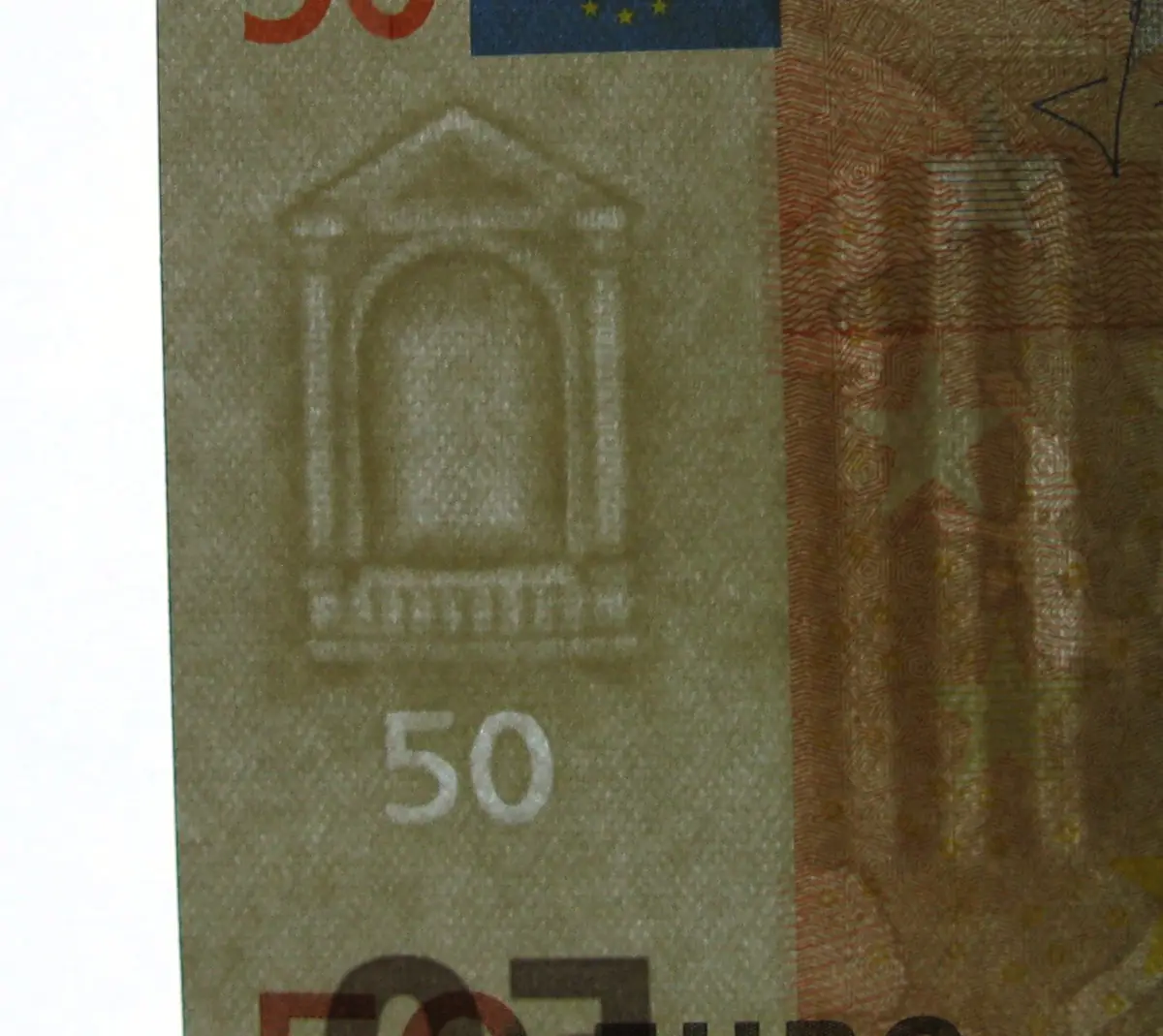
Google has also widened access to checking. Its SynthID page says anyone can use a SynthID Detector to check whether an image, video or audio file was made with AI from Google or partners that include OpenAI and NVIDIA, with Apple mentioned as coming. This only works for content that carries a SynthID mark.
Myth 6: Content Credentials prove a photo is real
Content Credentials, the open standard from the Coalition for Content Provenance and Authenticity (C2PA), work like a nutrition label for media: signed metadata records the origin and edits of a file. They can show that a file was captured by a specific camera, edited in a specific tool or generated by AI. They do not prove that what a photo shows really happened, and the label can be missing: metadata can be stripped when a file is re-saved, screenshotted or uploaded to a platform that removes it. Absence of credentials, like absence of a watermark, tells you little. Presence of valid credentials from a source you trust tells you more.
Myth 7: One of these tools will soon solve AI misinformation
No single layer is enough. Detectors are unreliable, watermarks cover only cooperating providers, and provenance records need adoption by cameras, editing software and platforms. Researchers and the standards bodies describe them as complements. In practice, the best defense for a reader is still ordinary verification: check the source, look for the original upload, search for the same image elsewhere and read beyond the headline. Our earlier myths pieces on AI chatbots and seven AI myths cover other common misconceptions.
A short decision guide
| If you want to… | Use | Do not rely on |
|---|---|---|
| Label your own model’s output | Watermarking such as SynthID | Third-party guesses |
| Show where a photo or video came from | Content Credentials (C2PA) | Visual impressions |
| Check a file from a specific provider | That provider’s detector | Generic AI detectors |
| Evaluate a claim or a person’s work | Source checks, drafts, conversation | A single detector score |
What to watch next
- Whether more AI providers adopt cross-vendor watermark detection like SynthID Detector.
- Wider support for Content Credentials in cameras, phones and social platforms.
- Research on watermark robustness against paraphrasing and translation.
- Policies in schools and workplaces that move away from detector-based enforcement.
- Regulation that requires labeling of AI-generated media.
Key takeaways
- Statistical AI detectors guess, and they can be wrong in both directions.
- A study found popular detectors misclassify non-native English writing as AI-generated.
- Watermarks only identify content from systems that add them, using their own detectors.
- Content Credentials record provenance but can be stripped, and they do not prove truth.
- Use several signals, and never judge a person on one detector score.
Frequently asked questions
Can ChatGPT or any tool tell me if something was written by AI?
Not reliably. Text detectors work from patterns and have shown both missed AI text and false accusations, including bias against non-native English writers.
What is SynthID?
SynthID is Google’s watermarking technology for AI-generated images, video, audio and text. It embeds an imperceptible signal when content is created, and a matching detector can look for it.
What are Content Credentials?
They are signed provenance records based on the C2PA standard that describe where a file came from and how it was edited. They help when present, but they can be removed and do not prove that the content is accurate.