Power, not chips alone, now sets the pace of AI expansion. A forecast from the research firm Gartner, published in June 2026 and widely covered since, puts numbers on that: global data center electricity consumption is expected to reach 565 terawatt hours (TWh) in 2026, up from 447 TWh in 2025, a rise of about 26%. The figures are a projection, not a measurement, but they are among the clearest public estimates of how quickly AI-driven demand is growing, and they help explain why utilities, regulators and cloud companies are reshuffling their plans.
The headline numbers
According to Gartner’s press release and trade coverage of it, the main points are:
- Global total: 565 TWh in 2026, compared with 447 TWh in 2025.
- AI servers: AI-optimized servers are expected to account for about 31% of data center power consumption in 2026, and by 2027 their consumption is expected to surpass that of conventional servers.
- United States: Network World reports the U.S. accounts for roughly 204 TWh, about 36% of the global total, with dedicated AI data centers using about 68 TWh, one third of that.
- Longer term: Gartner has estimated that worldwide data center power demand could reach about 290 gigawatts by 2030, though figures vary slightly across outlets.
We link to the original Gartner release above, but the full report is paywalled, so the details here come from the public summary and secondary coverage.
What the numbers mean
A terawatt hour is a unit of energy: a trillion watt hours. For scale, a small household might use around ten megawatt hours in a year, so one TWh equals the annual use of many tens of thousands of homes. The point of the comparison is order of magnitude, not precision; our explainer on how much energy AI uses goes through the conversion and the difference between training and everyday use.
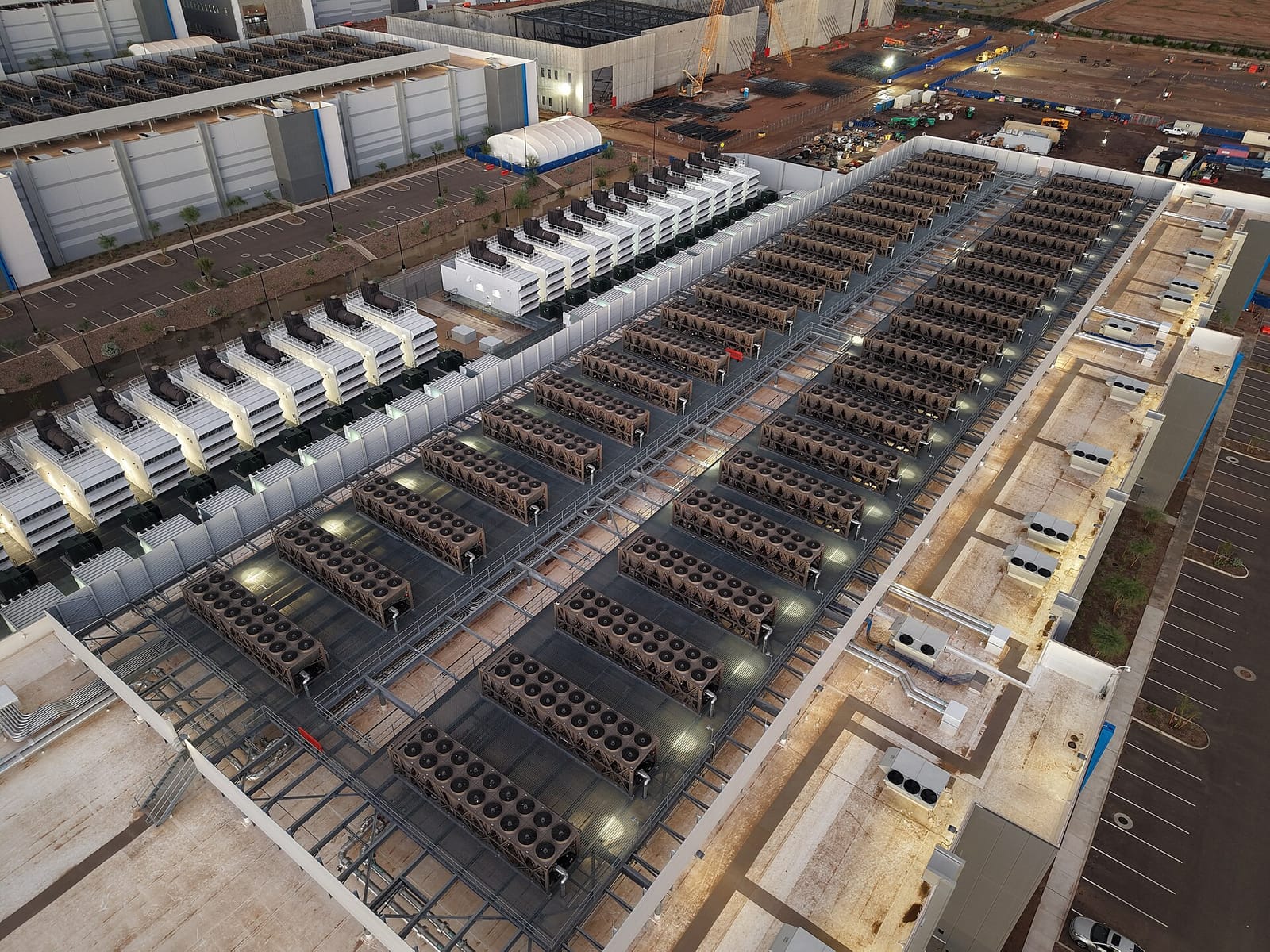
The more interesting figure is the AI share. When AI servers go from a minority of data center power to the majority within about a year, as Gartner expects, the mix of hardware changes and so do design choices: denser racks, liquid cooling, and new grid connections. We cover the cooling side in liquid cooling for AI data centers and measuring efficiency in what PUE means.
Power as the constraint
Gartner’s economist is quoted as saying that AI capacity is now constrained by power availability, and that securing data center power has become a battleground for scaling and protecting margins. That framing matches what we have seen in recent news, including Microsoft’s exit from a planned data center power arrangement in Essex, where energy supply shaped a deal.
Trade coverage also points to an aging grid. Data Center Knowledge has described how most of the electric grid was built between the 1950s and 1970s and how a large share of its equipment is approaching end of life. That is a general statement about infrastructure, and it does not mean any one project will fail, but it is why lead times for new connections can run for years.
Why forecasts differ
Be careful comparing numbers. Different organizations define “data center” differently, include or exclude cryptocurrency mining, count only IT load or total facility power, and use different years as baselines. The International Energy Agency’s report “Energy and AI” is a widely cited alternative, and its figures should not be mixed with Gartner’s without checking definitions.
Forecasts also depend on assumptions that can change quickly: chip efficiency per unit of work, how fast AI use grows, whether companies build on-site generation and how many announced projects actually get built. A forecast made in June can be overtaken by announcements within months, which is why we recommend treating it as a range of plausible outcomes.
Why it matters
Electricity is a shared resource. Data center growth competes with homes and factories for supply, can raise local prices and pushes companies to explore nuclear, gas and renewable contracts. It also raises questions about who pays for new grid capacity. For readers tracking AI economics, our piece on why AI is driving record spending on data centers and power connects the power numbers to capital spending.
What to watch next
- Utility and grid-operator filings showing how much new data center load is actually contracted.
- Updated forecasts from Gartner and the IEA as 2026 actuals come in.
- Chip and software efficiency gains that reduce energy per query.
- Regulatory moves on who pays for grid upgrades.
- New on-site power projects announced by large cloud providers.
Key takeaways
- Gartner projects 565 TWh of global data center electricity use in 2026, up about 26% from 447 TWh in 2025.
- AI-optimized servers are expected to be about 31% of that use in 2026 and to exceed conventional servers by 2027.
- Power availability is described as the binding constraint on AI capacity growth.
- Forecasts differ by definition and assumptions; compare like with like.
Frequently asked questions
Is the 565 TWh figure a measurement?
No. It is Gartner’s forecast for 2026, built on assumptions about demand and hardware.
Does AI account for most data center electricity today?
Gartner estimates AI-optimized servers are about 31% of data center power use in 2026, and expects them to pass conventional servers in 2027.
How is this different from the IEA’s numbers?
Definitions and methods differ, so the totals are not directly comparable. Check what each report counts before combining figures.