Modern machine translation is a neural network that reads a sentence in one language and writes the same meaning in another, having learned from millions of examples of human translations. It is good enough for travel, email and reading foreign news, but published research still shows weaker results for languages with little training data, and a fluent output can hide a wrong meaning. This guide explains how the systems work, how their quality is scored and which mistakes to watch for.
From phrase tables to neural networks
Early statistical translation systems matched phrases against large tables of aligned text. In 2016, Google introduced GNMT, a neural system based on recurrent networks, into Google Translate, as Google Research later described. Neural machine translation, or NMT, has since become the standard approach. Instead of stitching phrases together, an NMT model reads the whole sentence and generates the output word by word, using what it has learned about how meaning maps across languages.
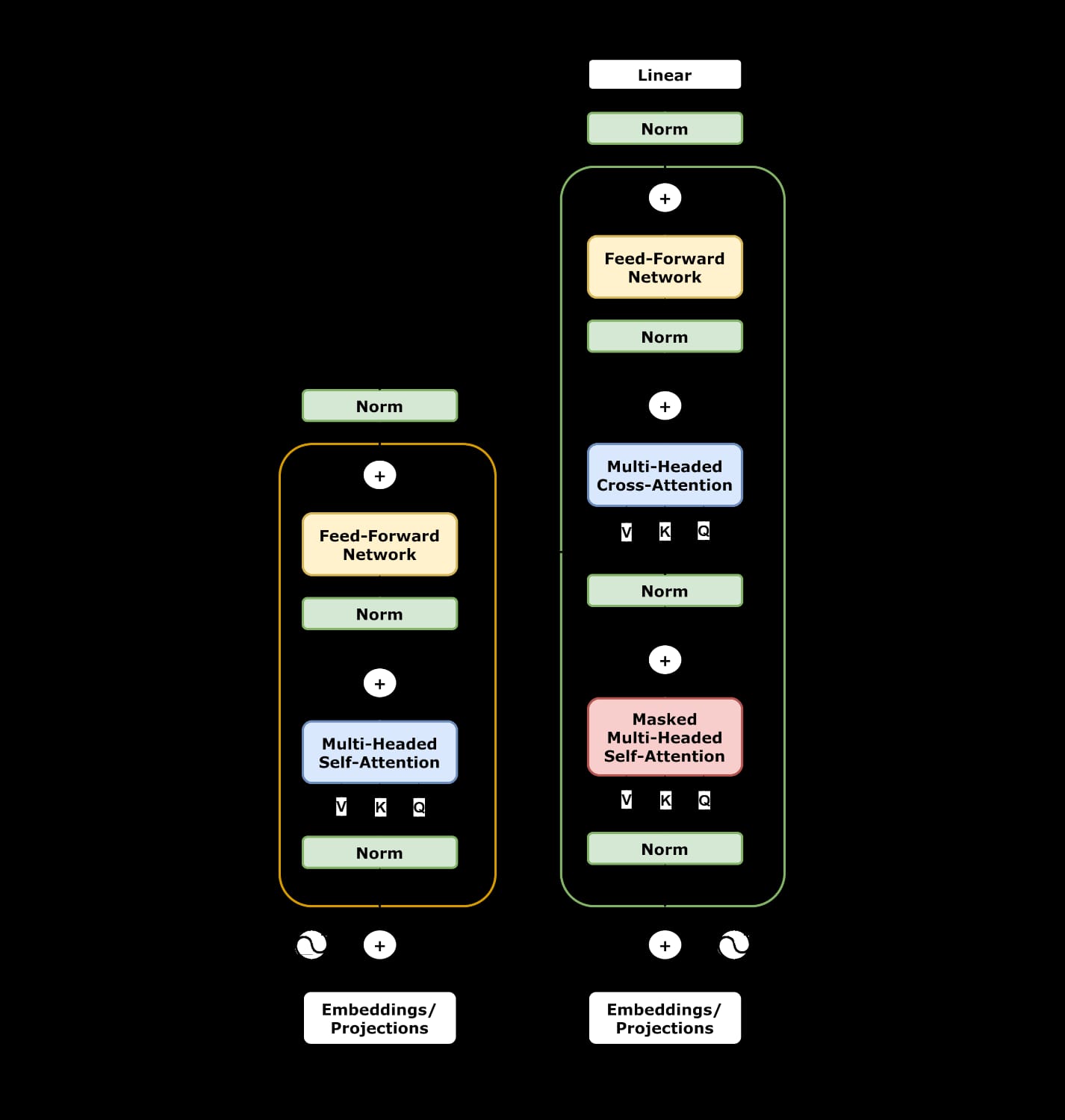
The next step was the Transformer architecture, introduced in the 2017 paper “Attention Is All You Need”. Its attention mechanism lets a model weigh every word of the input when producing each word of the output, which handles long sentences and word-order differences better than earlier designs. Our explainer on how Transformers work covers the mechanism in detail. Google Research reported in 2020 that it had replaced the original GNMT with models using a Transformer encoder and an RNN decoder, partly because the RNN decoder was faster at inference time.
How a model learns to translate
An NMT model is trained on parallel text: sentences in one language paired with human translations. Sources include public web pages, books, subtitles and institutional documents such as parliamentary records. The model sees a source sentence, predicts the translation, compares it with the reference and adjusts its parameters to reduce the error. Repeated across billions of sentence pairs, this teaches it grammar, vocabulary and idiom without a hand-written rule list.
Google Research notes that NMT is more sensitive to data quality than older phrase-based methods, so cleaning noisy web-mined data matters. The same post describes using monolingual data, text in only one language, and multilingual transfer learning, where one model learns many languages and the languages that have plenty of data help those with little.
Many languages, one model
Meta’s research group has pushed the multilingual idea furthest in published work. The Nature paper “Scaling neural machine translation to 200 languages” describes a single model family, NLLB-200, covering 200 languages, with a focus on low-resource ones. A follow-up Nature paper describes SEAMLESSM4T, one model that handles speech-to-speech translation from 101 languages into 36, speech-to-text into 96 languages, text-to-text across 96 languages and speech recognition in 96 languages. The authors report up to 8 percent and 23 percent higher BLEU scores than cascaded systems in speech-to-text and speech-to-speech tasks.
Large language models can also translate, because their training data includes many languages, and they can follow instructions such as “keep it formal” or “use the vocabulary in this glossary”. Dedicated translation services still tend to offer features chatbots lack, such as document formatting preservation and terminology lists, which is why specialist tools like DeepL and Google Translate remain popular.
How translation quality is measured
The most common automatic score is BLEU, which compares the machine output with one or more human reference translations by counting overlapping word sequences. A higher BLEU generally means closer to the reference, and Google Research reported an average gain of about 5 BLEU across 100+ languages in 2020. BLEU is cheap and repeatable, but it penalizes valid alternative wordings and cannot tell whether a mistake changes the meaning. Human evaluation, where bilingual raters score adequacy and fluency, remains the more reliable test, and newer learned metrics try to approximate it.
As with other AI tests, scores depend heavily on the test set. Our guide to how AI benchmarks work explains why a headline number rarely tells you how a system will do on your own text.
Where AI translation still fails
Google Research states plainly that state-of-the-art systems lag significantly behind human performance in all but the most specific translation tasks, and that low-resource languages such as Yoruba or Malayalam still lag high-resource ones like Spanish and German. The failure modes we see in practice follow from how the systems work:
- Fluent but wrong. A model optimizes for natural-sounding output, so an error can read smoothly. Numbers, negations, dates and units are the riskiest.
- Ambiguity and missing context. “Bank” or a gendered pronoun may have several translations, and a single sentence rarely says which is intended.
- Names and terminology. Product names, legal terms and medical vocabulary can be translated when they should be kept, or the reverse.
- Register and culture. Formality levels, honorifics, humor and idioms rarely map one to one.
- Low-resource languages. Less training data usually means more errors and more reliance on borrowing patterns from related languages.
- Hallucinated content. Like other generative models, a system can add or drop content, a problem we describe under hallucination.

A worked example
Take a short instruction: “Do not take more than two tablets a day.” A good system keeps the negation and the number. A weaker output in a low-resource language might drop “not” or render “two” as “second”, changing a safety instruction. Translating the output back to the source language, called back-translation, is a cheap first check: if the English that comes back differs from your original in meaning, do not trust the translation. It is not proof, since both directions can share an error, but it catches many gross mistakes.
How to use machine translation safely
- Match the stakes to the check. Casual reading needs none. Contracts, medical, legal, safety and immigration text should be reviewed by a qualified human translator.
- Give the model context. Translate whole paragraphs rather than isolated sentences, and state the audience and register if the tool allows.
- Protect names and terms. Use glossary features where offered, or list terms that must not change.
- Verify numbers and negations in the output yourself.
- Mind confidentiality. Check the tool’s terms before pasting private documents into a free service. Providers differ on what they store and use for training, so read the current policy.
What to watch next
- Further growth in the number of languages covered by single multilingual models.
- Better handling of dialects and spoken language in speech-to-speech translation.
- Evaluation methods that measure meaning errors rather than word overlap.
- Wider use of general chat models for translation with custom instructions and glossaries.
- Published results for languages that currently have little training data.
Key takeaways
- Modern translation uses neural networks, usually Transformer-based, trained on large collections of paired sentences.
- Multilingual models share what they learn across languages, which helps low-resource ones but does not close the gap.
- BLEU is a convenient but limited score; human review is still the stronger test.
- Fluent output can hide wrong numbers, negations and terminology.
- For high-stakes text, use a qualified human translator and check confidentiality terms.
Frequently asked questions
How accurate is AI translation?
It varies by language pair and text type. Google Research says state-of-the-art systems still lag human performance in all but the most specific tasks, with larger gaps for low-resource languages.
What is BLEU?
BLEU is an automatic score that compares machine output with human reference translations by counting matching word sequences. It is useful for tracking progress but does not capture every meaning error.
Can I rely on AI translation for legal or medical text?
Not without review. Use a qualified human translator for contracts, medical instructions and other high-stakes documents, and use machine output only as a draft or an aid.