Sim-to-real transfer is the practice of training a robot’s control software inside a physics simulator and then running it on a physical machine. It matters because real robots are slow, fragile and expensive to train by trial and error, while a simulator can run thousands of virtual robots faster than real time. The hard part is the “reality gap”: a policy that works perfectly in simulation can fail on hardware because friction, sensor noise, latency and materials never match exactly. This explainer covers how teams close that gap and where the approach still breaks down.
Why simulate at all
Reinforcement learning, where an agent improves through reward, typically needs millions of attempts. A legged robot that falls over each time would wear out long before it learned to walk. In simulation, a fall costs nothing and the environment can be reset instantly. Simulators also let engineers create dangerous or rare situations safely, such as slippery floors, pushes or sensor failures, and replay them on demand.
Compute has made this practical. In a 2021 paper from ETH Zurich and NVIDIA researchers, “Learning to Walk in Minutes Using Massively Parallel Deep Reinforcement Learning,” thousands of simulated robots were trained at once on a single GPU, and a quadruped learned to walk on flat ground in minutes. Frameworks such as NVIDIA Isaac Lab package this style of GPU-parallel training for robot learning.
The reality gap
A simulator is a model, and every model leaves something out. Common sources of mismatch include:
- Dynamics: motor strength, joint friction, backlash and the exact mass of each link.
- Contact: how soft materials deform, how feet slip or objects slide.
- Sensing: camera noise, lighting changes, lens distortion, depth-sensor errors.
- Latency: delays between sensing, computing and moving.
A policy that has learned to exploit a simulator’s quirks will look brilliant in the virtual world and stumble in the real one.
Domain randomization
The best-known remedy is domain randomization. Instead of trying to make one perfect simulator, engineers randomize the parameters during training: lighting, textures, object sizes, masses, friction, motor delays and more. The policy then has to work across a wide family of simulated worlds, so the real world looks like just another variation. A 2017 paper by Tobin and colleagues, “Domain Randomization for Transferring Deep Neural Networks from Simulated to the Real World,” showed that an object detector trained only on randomized synthetic images could work on real camera input for a robotic task.
OpenAI’s 2019 Rubik’s Cube project took the idea further with automatic domain randomization, which widens the range of randomized parameters as the policy improves. According to the paper, a robot hand trained entirely in simulation solved the cube on real hardware, though not reliably in every attempt, which is itself a useful reminder of how hard transfer remains.
Other techniques
- System identification: measure the real robot and tune the simulator to match it.
- Domain adaptation: adjust the policy or perception model using a small amount of real data.
- Teacher-student training: train a teacher with privileged simulator information, such as exact terrain shape, then distill a student that uses only onboard sensors.
- Fine-tuning on hardware: use limited real-world trials after simulation to correct remaining errors.
Many practical systems combine these with demonstrations from humans; our explainer on robots learning from demonstrations covers that complementary route.
World models as a new kind of simulator
Traditional simulators are hand-built from physics equations. A newer approach learns the simulator from video and interaction data. Google DeepMind’s Genie 4, announced this week, is described as a real-time world model that can serve as a source of training environments for robots and agents, and our report on Genie 4 lists its stated limits, including drift in object permanence over longer runs. NVIDIA’s Cosmos tools target the same need for robotics; see our coverage of the Cosmos world-model tools. The open question is whether generated worlds are accurate enough in contact physics to train reliable manipulation, since a plausible-looking video is not necessarily a correct simulation.
What this means for humanoids
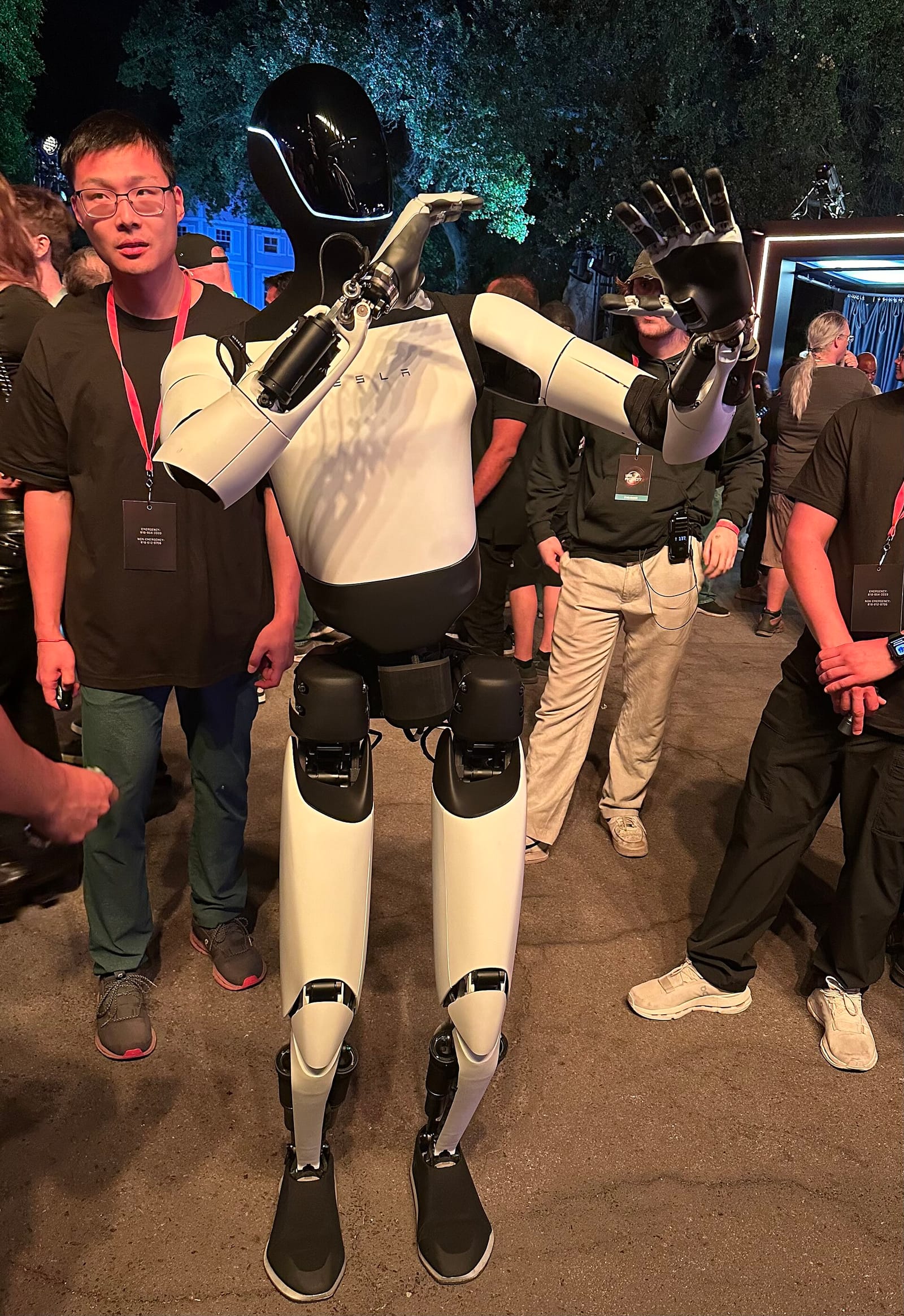
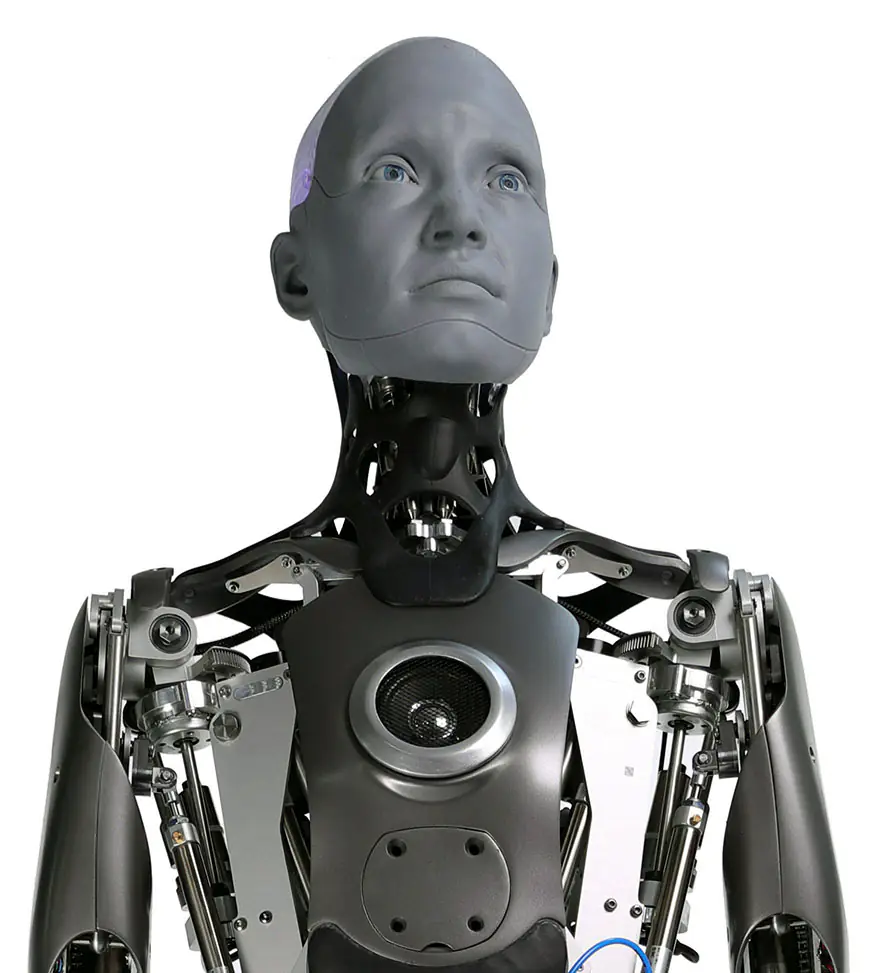
Humanoid robots add many joints, balance constraints and contact-rich tasks, which makes both simulation and transfer harder. Companies and labs are mixing large-scale simulation, teleoperated demonstrations and foundation-model control. Our humanoid robots explainer describes the current landscape. The New York Times ran a feature this week on a “Robogym” where machines train to be more like humans, at a robotics company in Germany.
What to watch next
- Published success rates of simulation-trained policies on real hardware, not just demos.
- Open benchmarks that measure the sim-to-real gap across robots and tasks.
- Evidence on whether learned world models can train contact-rich manipulation.
- Cheaper hardware for collecting real-world corrections.
- Safety standards for robots whose behavior comes from learned policies.
Key takeaways
- Sim-to-real trains robot policies in physics simulators and deploys them on real hardware.
- Massively parallel GPU simulation can teach basic locomotion in minutes.
- The reality gap comes from mismatched dynamics, contact, sensing and latency.
- Domain randomization trains across many varied worlds so the real one looks familiar.
- Learned world models are a promising but unproven alternative to hand-built simulators.
Frequently asked questions
What is sim-to-real transfer?
It is the process of training a robot controller in simulation and then running it on a physical robot, with techniques to ensure it still works despite differences between the two.
What is domain randomization?
It is a training method that randomizes simulated lighting, physics and object properties so the policy learns to handle variation, including the unknown differences of the real world.
Can world models replace physics simulators?
Not yet. They can generate rich, varied scenes, but developers are still testing whether they capture contact and physics accurately enough to train dependable robots.