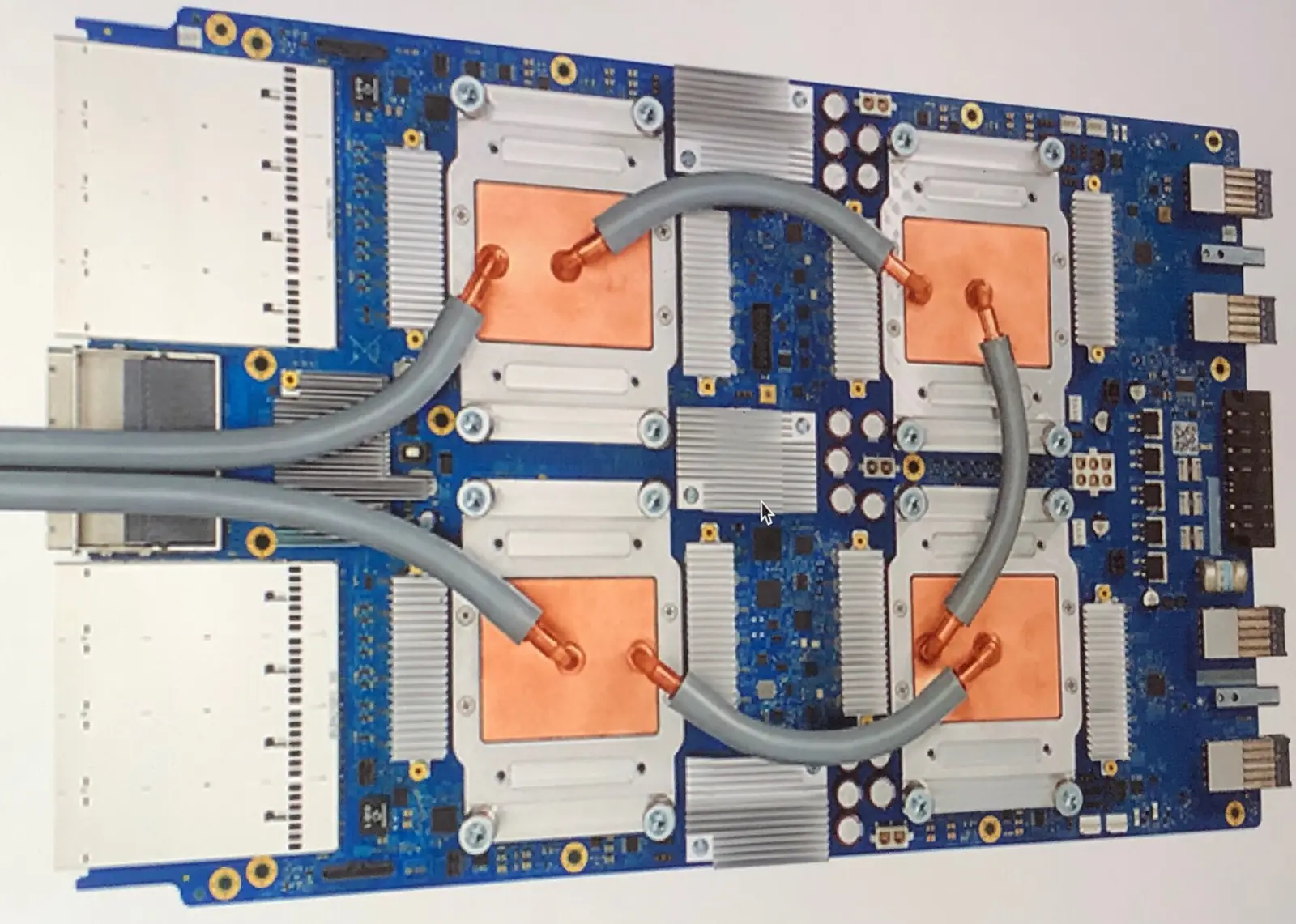
Google said on Friday, October 30, that the satellite it launched earlier this month for Project Suncatcher has booted its on-board Tensor Processing Units (TPUs) and used them to run the Gemma 4 model, which answered a prompt from orbit and sent the reply back to Earth. The answer was a haiku about being in space. It is a small demonstration, but it is the first public sign that Google’s idea of putting AI computing hardware in space works at the most basic level.
What Google reported
According to The Verge, the test confirmed that the satellite’s TPUs start up and can execute a workload while orbiting. The model followed a prompt to write a haiku about being in space; Google also said it tried other space-themed prompts and telemetry requests. The Verge reproduced the poem the satellite produced, which refers to the Earth below and starlight feeding “my core.”
The jokes aside, the milestone is about hardware. A chip that works on a lab bench can fail in orbit because of heat that cannot be shed the way it is on the ground, and because of radiation that flips bits or damages circuits. Starting up and answering a prompt shows the system is alive; it does not yet show that it is reliable.
The tests that matter next
Google says the next phase is a series of tests to evaluate how its TPUs perform under thermal stress and radiation exposure in orbit. Those are the two risks that decide whether space-based compute is practical. Google also says that verifying reliable execution paves the way for its next milestone: twin interconnected satellites in 2027, which would test whether satellites can link to each other and share a workload instead of working alone.
Why Google is trying this
Project Suncatcher is described by Google as a research moonshot to scale machine learning compute in space. In the company’s original 2025 announcement, the pitch was that satellites in suitable orbits receive far more continuous solar energy than a panel on the ground, which could eventually reduce the land, water and grid capacity that terrestrial data centers need. Whether that holds up once launch costs, cooling, repair and radiation shielding are counted is exactly what the project is meant to find out. Nothing in this week’s announcement gives cost or capacity figures, so any comparison with a ground-based data center would be speculation.

How it compares with the ground-based buildout
The timing is notable. Investors have grown wary of AI infrastructure spending, and communities are pushing back on new data centers: our report on UK data center consultations shows how little input environmental groups had, and a judge this week allowed an NAACP lawsuit over xAI data center pollution to proceed, TechCrunch reported. Orbit sidesteps local opposition but introduces new problems: a satellite cannot be physically serviced, and the hardware must survive launch and years of radiation.
The scale is also very different. The largest terrestrial projects involve billions of dollars of chips, such as the $40 billion GPU lease we covered. One satellite running a small open model is a proof of concept, not a competitor to that capacity.
What the choice of model tells us
Running Gemma 4, an open-weight Google model, rather than a large Gemini model fits the hardware constraints: a satellite has limited power and cooling, so a smaller model is the realistic first workload. It also means the demonstration says nothing about whether frontier-scale training or inference could ever be done in orbit.
What to watch next
- Results from the thermal and radiation tests, and whether Google publishes error rates.
- The 2027 launch of twin interconnected satellites and their inter-satellite link speeds.
- Any cost per unit of compute, which Google has not published.
- Whether other companies announce competing orbital compute projects.
- Regulatory and orbital-debris questions as more hardware is launched.
Key takeaways
- Google’s Suncatcher satellite booted its TPUs and ran Gemma 4 in orbit, returning a haiku.
- The demonstration proves basic operation, not reliability, capacity or cost.
- Thermal stress and radiation tests are next, followed by twin satellites in 2027.
- Google has not released power, performance or cost numbers for the system.
- The effort is a research moonshot, not a replacement for ground data centers.
Frequently asked questions
What is Project Suncatcher?
It is a Google research project exploring whether machine learning compute can be run on satellites powered by sunlight. The first satellite carries TPUs and was launched this month.
Which AI model ran on the satellite?
Google says the on-board Gemma 4 model followed the prompt and wrote a haiku about being in space, according to The Verge.
When will Google test connected satellites?
Google says its next milestone is a pair of interconnected satellites in 2027, after tests of TPU performance under thermal stress and radiation.