Levent Alpöge, a mathematician who works at Anthropic, said on Friday, November 20, that he and the company’s Claude model have proved the Riemann hypothesis, the 167-year-old conjecture about the distribution of prime numbers and one of the seven Millennium Prize Problems. In a four-page statement on his website he says the method also proves the Generalized Riemann Hypothesis, and that the full argument has been formalized in the Lean proof assistant. The claim has not yet been checked by the wider mathematical community, and Anthropic itself has not issued an announcement, according to SiliconANGLE.
What Alpöge says he and Claude did
Alpöge’s note, titled as a remark on the proof, says he had planned for years to attack the problem and spent recent months working on it with Claude. He writes that he steered the work toward a setting analogous to a “toy” case he had found, and that Claude then “far outpaced” him near the end. He credits the model with a key suggestion about chaining theta lifts, a technique from the theory of automorphic forms, to imitate a counting trick known as multiplicity that works for curves over finite fields but has no obvious counterpart for whole numbers.
He also gives a rough timeline that, he says, Claude assembled from their work, running from early October to late October 2026. On the form of the result he is explicit: the argument is “incredibly long,” a natural-language version produced along the way ran past 250,000 pages, and he chose to release only the Lean code rather than post what he calls an unreadable document. The Lean files are published as a split archive in 14 parts on his site. He says he will now try to understand the argument, simplify it and write it up properly, and he expects much shorter proofs to follow.
Alpöge also addressed the timing. The note says the breakthrough came “late Sunday night,” days before Anthropic’s record stock market listing, and that he asked the company’s leadership how he could announce it. He calls the timing “horrible” and rejects the cynical reading that it was planned. Our earlier report covers Anthropic’s IPO pricing at $83 a share.
A second claimed proof on the same day
Hours earlier, Stanford mathematician Ravi Vakil, president of the American Mathematical Society, posted a draft proof of the Generalized Riemann Hypothesis by Stanford postdoc Alessandro Masullo. Vakil wrote that the work was “all human, with no AI,” that Brian Conrad had been checking it for months, and that the plan had been to polish it for a year before announcing. He said it now seemed best to release the draft. In an update about eight hours later, Vakil wrote that several people had reported problems in that proof, some found with the help of AI models, and that he makes no claim about its correctness.
What a compiling Lean proof does and does not settle
The two claims differ in one important way. Masullo’s draft is a conventional paper that experts must read line by line. Alpöge’s is a machine-checkable program. TechCrunch reports that several participants in a public Zulip discussion, including MIT mathematician Andrew Sutherland, said they had compiled the Lean code successfully.
A successful compile is strong evidence, but it is not the end of the check. As our explainer on Lean and AI formalization describes, reviewers still need to confirm three things:
- The statement is the right one. The Lean theorem must say exactly what the Riemann hypothesis says, with definitions that match the standard ones rather than a subtly weaker version.
- No shortcuts are hidden. Proofs can depend on extra axioms or placeholder steps; experts will audit which axioms the final theorem relies on. Alpöge writes that the arguments were formalized “without assumptions.”
- The supporting library is sound. A proof of this size depends on large amounts of formalized number theory, and any new definitions it introduces need the same scrutiny.
Our coverage of OpenAI’s quasi-Riemann result in October showed how quickly AI-assisted mathematics has moved, but that result concerned a weaker variant. A verified proof of the full hypothesis would be in a different category.
Why it matters
The Riemann hypothesis predicts that the primes are distributed as regularly as possible, and many published theorems assume it. If the proof holds, it would be the most significant mathematical result produced with an AI system to date, and it would arrive in a form that computers, not only people, can check. It would also raise questions mathematicians are already debating: how to credit a model’s contribution, and what it means to accept a result before any human fully understands it. Alpöge himself describes presenting a complete argument before having mastered the mathematics around it as an “extraordinary situation.”
What to watch next
- Independent audits of the Lean statement, axioms and new definitions by formalization experts.
- Whether Alpöge or Anthropic publishes a human-readable account of the argument and its key ideas.
- The outcome of community checks on Masullo’s separate, human-written draft.
- Any response from the Clay Mathematics Institute, whose prize rules require publication and a waiting period.
Key takeaways
- Anthropic mathematician Levent Alpöge claims a proof of the Riemann hypothesis and its generalized form, found with Claude.
- He released only a Lean formalization; a natural-language version ran past 250,000 pages.
- Early reports say the Lean code compiles, but the statement and axioms still need expert auditing.
- A separate, human-written draft proof of the generalized hypothesis surfaced the same day and has already drawn reported problems.
Frequently asked questions
What is the Riemann hypothesis?
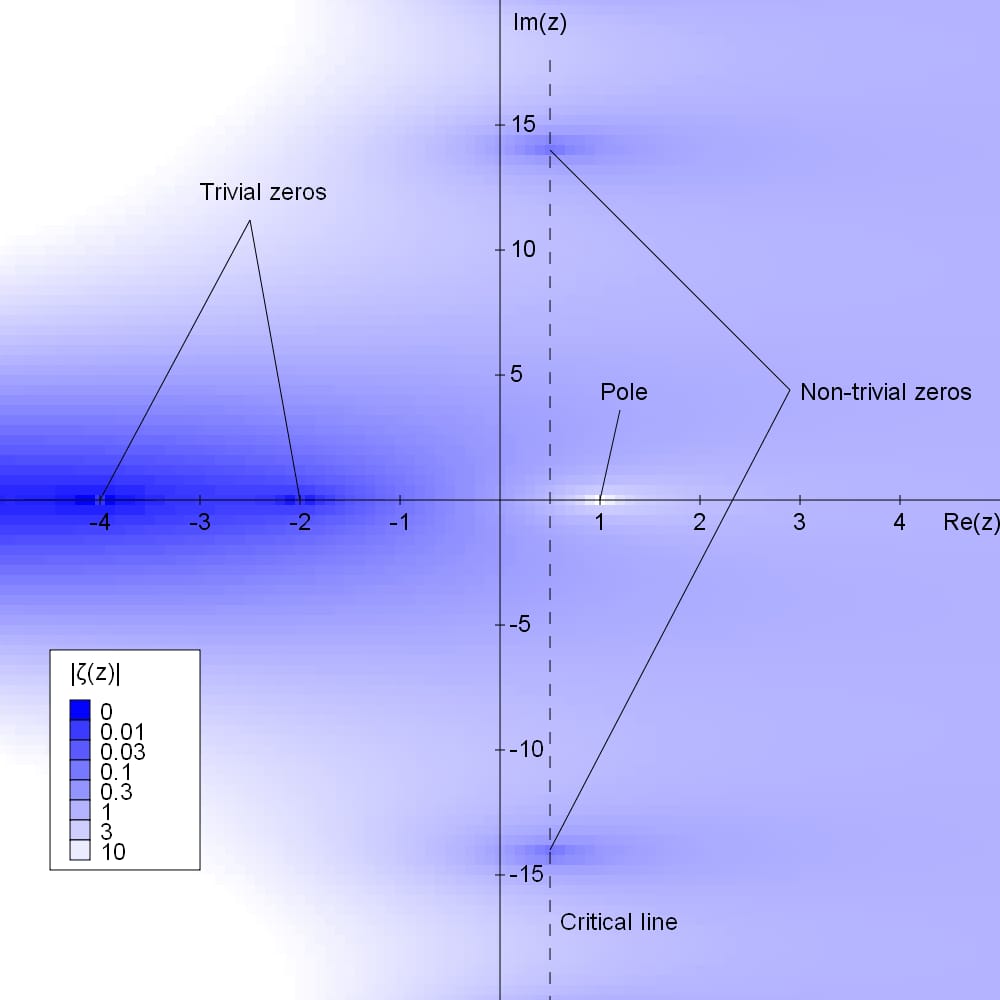
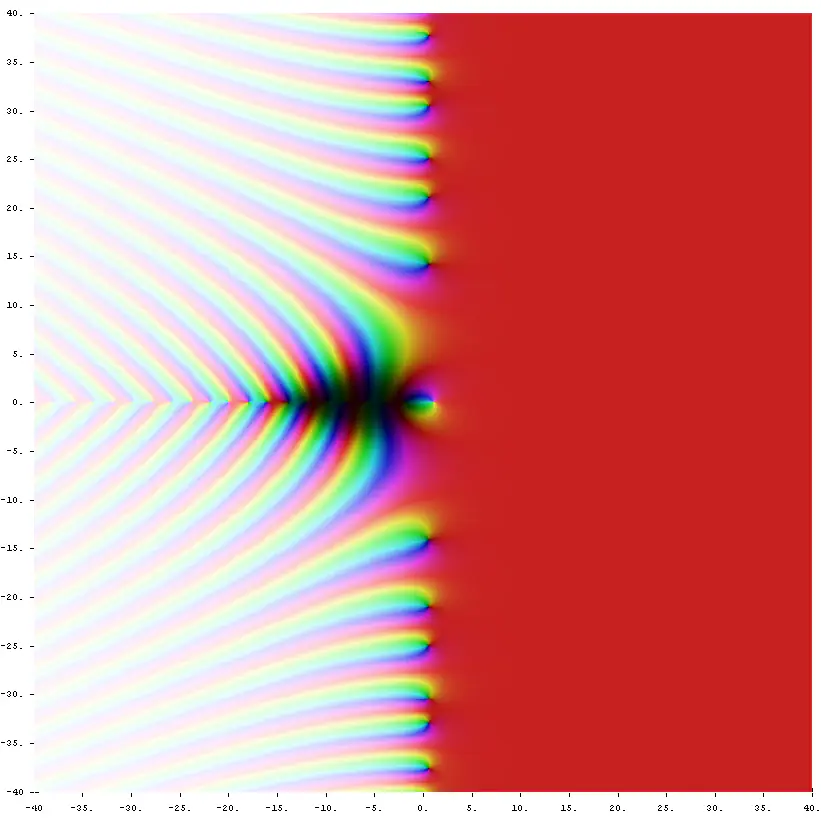
It is a conjecture from 1859 stating that all nontrivial zeros of the Riemann zeta function lie on the line with real part 1/2. If true, it means the prime numbers are distributed as regularly as possible.
Has the claimed proof been verified?
Not yet. Reports say mathematicians have compiled the Lean code, but experts still need to confirm the formal statement matches the hypothesis and that no hidden assumptions are used.
Will the Millennium Prize be awarded for this?
Not immediately. The Clay Mathematics Institute requires a solution to be published and accepted by the mathematical community over a waiting period before it considers an award.