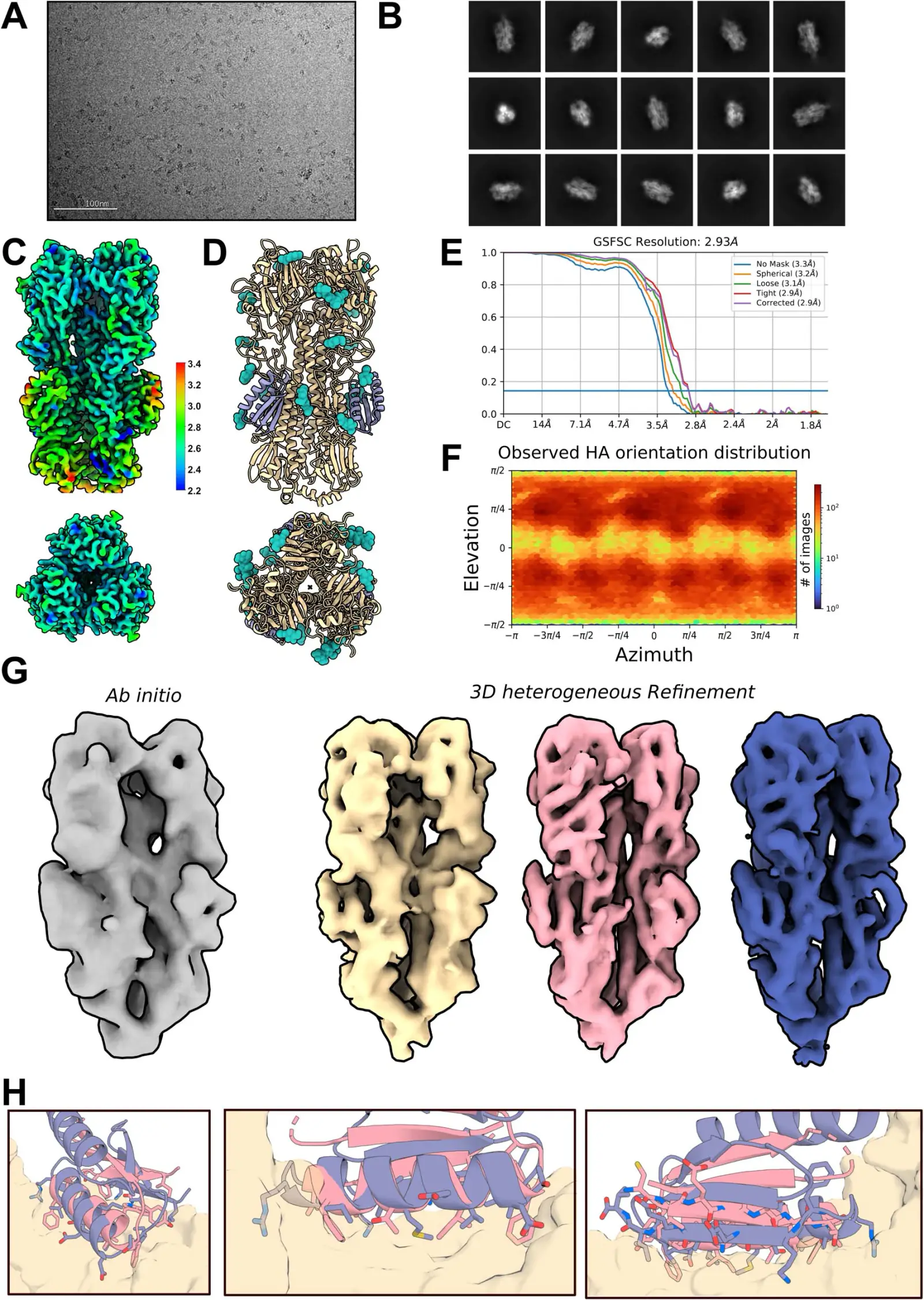
OpenAI said on Tuesday, November 24, that its GPT-6 model family can design new proteins using only reasoning and general-purpose coding tools, without calling the specialized biology models that normally do that work. In laboratory tests run with the research company Onava, 35 of 322 small proteins designed by GPT-6.2 showed evidence of binding to their intended targets — a 10.9% hit rate across five targets — and redesigned antibody fragments kept binding in 66% to 70% of cases.
The results come with a preprint, “GPT-6 as a Universal Foundation Model for Protein Biology: Beyond Specialized Models,” and a code repository. OpenAI is explicit that the work does not yet show end-to-end protein design: specialized models still supplied amino acid sequences and filtered which candidates went to the bench.
What the lab experiments showed
The first experiment asked GPT-6.2 for the three-dimensional shapes of minibinders — small proteins designed to attach to a chosen site on a target. The model wrote code to generate the designs; the specialized model SolubleMPNN then proposed sequences, and other models picked candidates to build. Of 322 minibinders tested against five targets, 35 bound: 18 for IL-17A, 8 for VEGF-A, 5 for PD-L1, 3 for IL-7Rα and 1 for TrkA.
The second experiment reversed the task. Given existing minibinder structures with their sequences withheld, GPT-6.2 proposed new sequences. Early screens showed binding in 75 of 88 designs for MDM2 (85%), 26 of 42 for VEGF-A (62%) and 8 of 59 for PD-1 (14%), with sequences that differed from the originals by a median of 15% to 50% of their amino acids. For three unpublished shapes the model had generated itself, 14 of 107 designs (13.1%) bound.
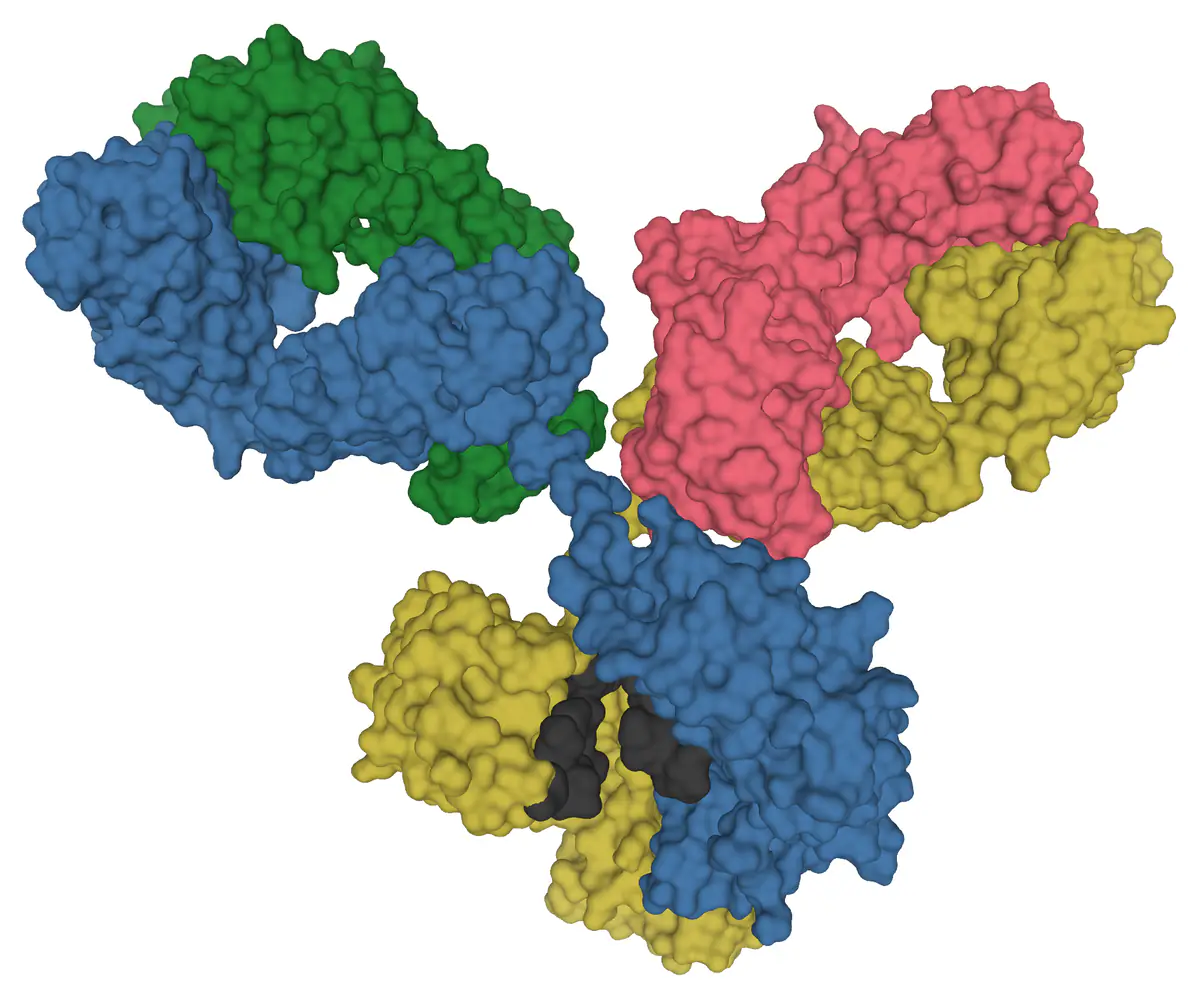
A third set of tests redesigned the loops that let an antibody grip its target. Of 182 designs for six small antibodies against IL-4Rα, 128 (70%) showed binding; of 272 fragments based on five therapeutic antibodies, 179 (66%) still bound PD-1 or PD-L1.
How it compares with specialized models
OpenAI’s computational benchmarks are the clearest comparison with purpose-built tools. On MotifBench, where a model must build a protein around a fixed arrangement of amino acids, 43.7% of designs from OpenAI’s latest internal model passed its checks against 27.8% for RFdiffusion. On 200 fold-specification challenges, the internal model scored 18.9% against 17.1% for Proteina.
Docking — predicting where a small molecule sits on a protein — favored the general models more clearly: on the PoseBusters set, GPT-6.2 matched the observed pose in 93% of scored predictions and the internal model in 96%, against 50% for DiffDock-L. Predicting how an antibody meets its target improved with each generation, with mean DockQ rising from about 0.05 for GPT-5.6 to 0.28 for GPT-6, 0.57 for GPT-6.2 and 0.81 for the internal model.
One task stayed firmly with the specialists. Predicting a complete structure from sequence alone, the models averaged a TM-score of 0.38 at best, against 0.93 for ESMFold2 — a reminder of what OpenAI calls the jagged capability frontier.
Why the hit rates need context
A 10.9% binding rate sounds low, and OpenAI notes the original RFdiffusion study reported higher rates. Hit rates in this field depend heavily on how strictly designs are filtered before anything reaches a bench and on what counts as binding, so the number is not a clean head-to-head score. Two caveats matter more: the design campaign leaned on Boltz-2, OpenDDE and ESMFold2 to choose candidates, and some benchmark results may partly reflect memorization of public structures.
Binding is also only the first requirement for a drug. Specificity, stability, biological activity, manufacturability, safety and efficacy all come later, which is why the company frames this as an early step rather than a therapeutic result.
Who is affected
For drug discovery teams, the practical claim is about workflow rather than raw quality: a prompt can carry constraints that specialized models cannot accept without retraining, such as where a binder should attach, how many helices or strands it should contain, or which target residues should be buried. OpenAI says it could switch between docking variants simply by changing the prompt.
For biosecurity, the same capability cuts both ways. OpenAI says its Preparedness Framework governs how it assesses and mitigates misuse risk here, a question regulators have been circling as general models absorb more wet-lab-adjacent skills. Earlier this year Google Research described agents working against real wet-lab feedback under a safety layer of its own.
What to watch next
- Whether an outside group reproduces the lab results, or publishes hit rates for GPT-6.2 designs under its own filtering.
- Whether OpenAI can drop the specialized filters and show a zero-shot, end-to-end design run.
- Peer review of the preprint, which is not yet reviewed.
- Progress on harder targets and on designs tested for function, not just binding.
- How safety frameworks and regulators treat general-purpose models with protein-design skills.
Key takeaways
- OpenAI reports that GPT-6 models can generate protein structures and sequences with reasoning and code alone, no specialized biology model required for those steps.
- With Onava, 35 of 322 GPT-6.2-designed minibinders (10.9%) bound their targets, and 66% to 70% of redesigned antibody fragments retained binding.
- On MotifBench and docking benchmarks the models matched or beat RFdiffusion, Proteina and DiffDock variants.
- Full structure prediction from sequence remains far behind ESMFold2 (0.38 versus 0.93 TM-score).
- Specialized models still filtered candidates, so this is not yet end-to-end design, and binding is only one step toward a medicine.
Frequently asked questions
Did GPT-6 design proteins entirely on its own?
No. The models generated structures and sequences, but specialized tools such as SolubleMPNN, ProteinMPNN, Boltz-2 and ESMFold2 supplied sequences for some designs and filtered which candidates were made and tested.
What is a minibinder?
A minibinder is a small, engineered protein designed to attach to a specific site on a target protein. Researchers use them as research tools and as starting points for drugs that block a target’s interactions.
Is the paper peer-reviewed?
No. The work is a preprint published by OpenAI alongside a code repository, so its claims have not been through external peer review.