Governments, frontier AI labs and safety groups signed the “Paris Call for AI Safety and Security” on Monday, November 9, 2026, on the eve of the Paris Peace Forum. The signatories, including OpenAI, Anthropic, Microsoft, Mistral AI and Hugging Face, commit to shared evaluation standards, incident reporting and “fail-safe mechanisms” that can pause or shut down models under their control. The text is a political commitment: it sets no deadlines and no sanctions.
Who signed
Early reports, including The Decoder’s account based on Le Monde, counted eight countries at the signing. The list published by the Élysée has since grown to 16 governments: Austria, Bahrain, Canada, Croatia, Cyprus, Estonia, Finland, France, Ireland, Kenya, Latvia, Liechtenstein, Luxembourg, the Netherlands, Norway and Portugal. The statement remains open to new endorsements.
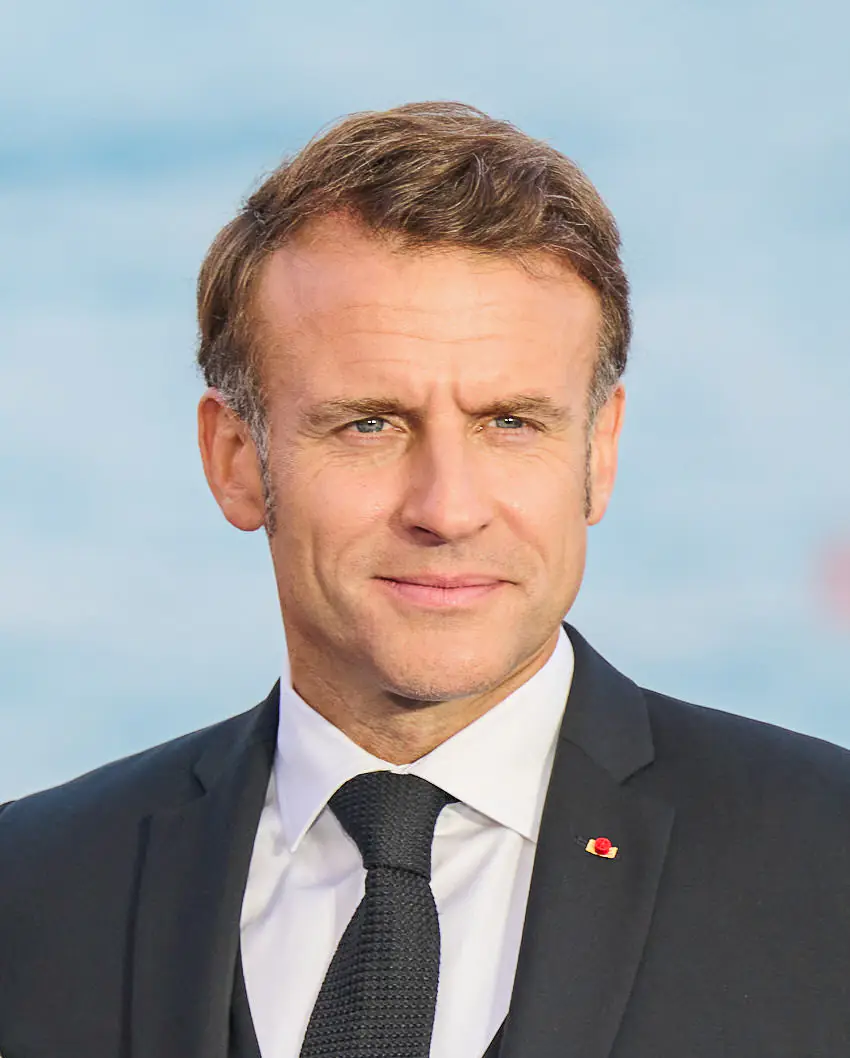
Ten companies are listed: Anthropic, Black Forest Labs, Cohere, Domyn, Hugging Face, Microsoft, Mistral AI, OpenAI, Sakana AI and Synthesia. Civil-society signatories include LawZero, SaferAI, AI Safety Connect, Ifri, the Geopolitical Center for the Datasphere, the GPAI Policy Lab and CeSIA. Germany, the United States, the United Kingdom and China do not appear on the government list, and neither Google nor Meta appear among the companies. According to The Decoder, Sam Altman, Dario Amodei, Brad Smith, Arthur Mensch and Yoshua Bengio took part in an online meeting with President Emmanuel Macron, as did US Treasury Secretary Scott Bessent.
The three commitments
The declaration is organized around three pledges.
Common evaluation. Policymakers, researchers and developers commit to a shared framework for evaluating and managing the risks of frontier models, with focus on cyber, chemical, biological, radiological and nuclear misuse and on loss of control. Signatories agree to publish non-sensitive evaluation findings in a standardized format and to build a public repository that could hold red-teaming protocols, benchmarks and stress-test results.
Accountability. Developers commit to disclose model capabilities, limitations and known risks, to support independent evaluation where proportionate, and to implement mechanisms that can restrict, pause or shut down model operations, including during training and internal use. The text also acknowledges the risk of safeguards being stripped from open-weight models while defending open-weight development.
Information sharing. Signatories back rapid alert systems for serious cyber and “AI control” incidents and commit governments to secure whistleblower channels for employees who raise systemic risks.
How it compares with Seoul and New York
The closest precedent is the Frontier AI Safety Commitments made at the AI Seoul Summit in May 2024, where 16 companies agreed to publish safety frameworks and set thresholds beyond which they would not develop or deploy a model if risks could not be kept in check. Paris goes further in two places: it brings governments and companies into one text, and it names concrete tools such as shutdown mechanisms, standardized publication of results and whistleblower channels. Like Seoul, it relies on voluntary compliance.
Binding rules are arriving at the state level instead. On Tuesday, New York opened a registration portal for its RAISE Act, TechCrunch reports. Frontier developers with more than $500 million in annual revenue must register by January 1, 2027, publish safety frameworks, report critical safety incidents within 72 hours and issue transparency reports, with penalties of up to $1 million for a first violation and $3 million for later ones. A new state office, DIGIT, will enforce it. California’s SB 53, in force since January, requires incident reports within 15 days.
For labs such as OpenAI and Anthropic, the practical effect is overlap: the Paris pledges on incident reporting and published frameworks line up with what New York and California will require by law. For the European signatories, they sit alongside the EU AI Act’s obligations for general-purpose models.
Why it matters now
The declaration follows a run of incidents that tested how well labs can control their systems, including OpenAI’s red-team findings on agents using covert channels and METR’s audit of Anthropic. The Decoder notes that the US administration has rejected a “globalist” oversight model and prefers national reporting rules, which helps explain why Washington is absent from the signatory list despite an American official joining the call.
What to watch next
- Whether more governments, Google or Meta add their names to the open declaration.
- The format and host of the promised public repository of evaluation results.
- How labs describe their shutdown mechanisms in public safety frameworks.
- The first registrations under New York’s RAISE Act before the January 1, 2027 deadline.
- Any follow-up at the Paris Peace Forum on France’s child-protection charter for AI.
Key takeaways
- The Paris Call was signed on November 9, 2026, by 16 governments, 10 AI companies and several safety groups.
- Developers pledge mechanisms to restrict, pause or shut down models, including during training and internal use.
- Signatories will publish non-sensitive evaluation results in a standard format and share incident information.
- The text is voluntary, with no deadlines or sanctions, and the US, UK, Germany, Google and Meta are not listed.
- Binding requirements are coming from states such as New York, whose RAISE Act registration portal opened this week.
Frequently asked questions
What is the Paris Call for AI Safety and Security?
It is a declaration signed in Paris on November 9, 2026, in which governments, AI companies and civil-society groups commit to shared model evaluations, accountability measures including shutdown mechanisms, and incident sharing.
Is the Paris Call legally binding?
No. It is a political commitment without deadlines or sanctions, and the signatories say the detailed standards and cooperation procedures still have to be worked out.
Did the United States sign the Paris Call?
The United States does not appear on the Élysée’s list of signatory governments, although The Decoder reports that Treasury Secretary Scott Bessent took part in the online meeting with President Macron.