Bengaluru-based Sarvam AI on Sunday, November 22, released Sarvam-105B-1711, a new open-weight checkpoint of its 105-billion-parameter model, tuned for customer-support agents, voice bots and Indian languages. The weights are on Hugging Face under the Apache 2.0 license, including a 65 GB NVFP4 version that Sarvam says runs on a single workstation GPU, and the company has cut the model’s blended API price by about two-thirds, from $0.44 to $0.15 per million tokens. Sarvam says the model now scores 73.9 on average across eight conversational-agent benchmarks, up from 42.6 for its February release.
What Sarvam released
Sarvam-105B-1711 uses the same base model as the original Sarvam-105B: a mixture-of-experts design with 105 billion total parameters, of which 10.3 billion are active for each token. The new checkpoint is a post-training update. According to the model card, it improves tool calling, instruction following, agentic tasks and Indian-language performance. Context length was extended to 160,000 tokens through long-context training on 512 GPUs.
Two builds are available: BF16 weights and an NVFP4 4-bit build. The model card includes serving instructions for vLLM, and Sarvam recommends a temperature of 1.0 with thinking mode on and 0.6 with it off. Sarvam calls it a “Flash-Lite” class model, meaning a fast, cheap model for high-volume work rather than a frontier reasoning system.
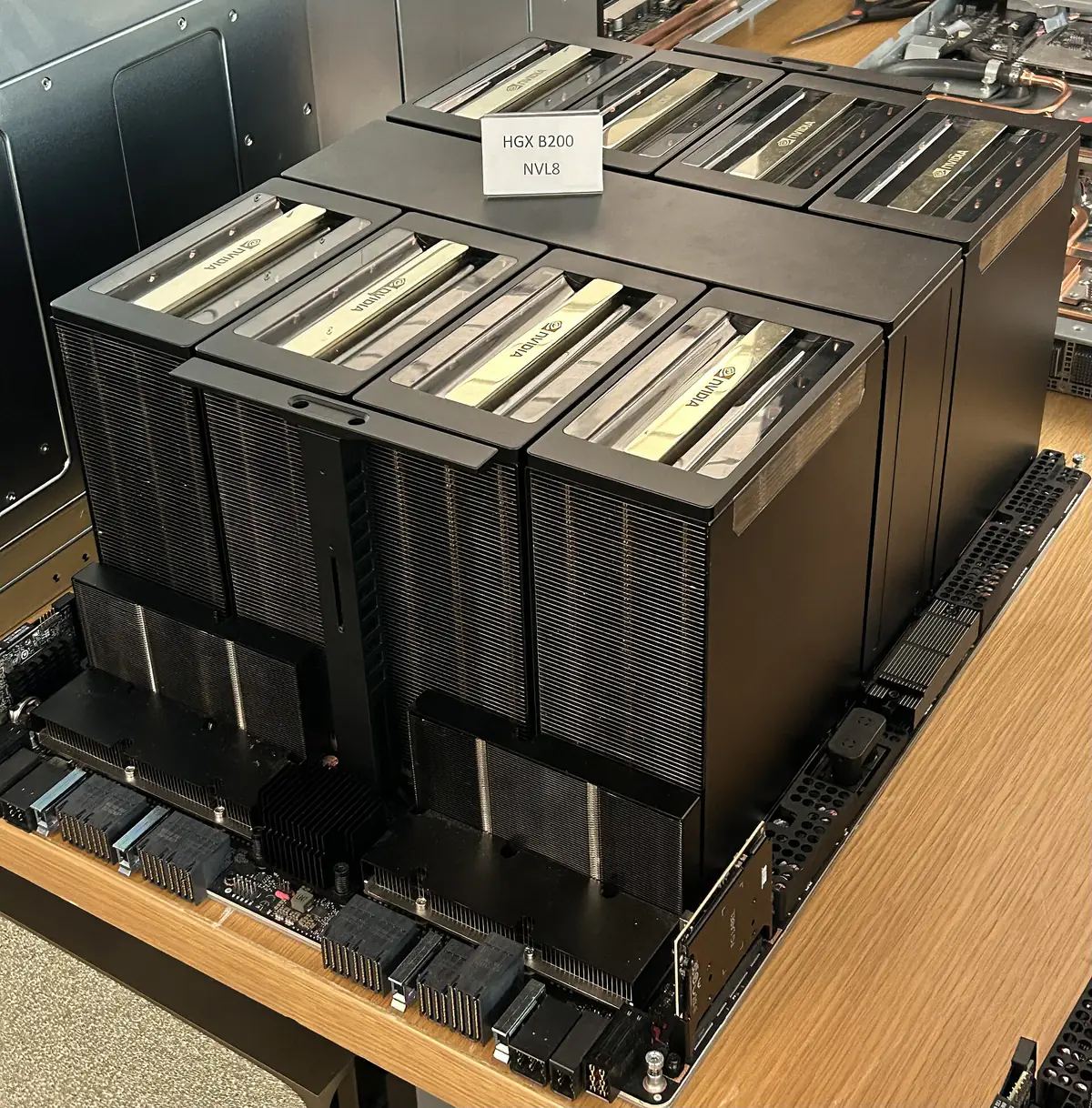
The company says it trained the update on its upgraded NVIDIA B200 infrastructure. Training in 8-bit precision roughly doubled pretraining throughput, from 5,500 to 10,900 tokens per second per GPU, and cut each reinforcement-learning step from about 13 minutes to about 7.
The benchmark gains Sarvam reports
All scores below are Sarvam’s own runs, published in its announcement and model card; independent leaderboards have not yet listed the model.
| Benchmark | Sarvam-105B (Feb) | Sarvam-105B-1711 |
|---|---|---|
| IFBench (instruction following) | 32.5 | 82.5 |
| Tau2 average (tool use in customer service) | 46.2 | 85.5 |
| Sarvam Indic suite | 30.1 | 79.1 |
| Eight-benchmark conversational average | 42.6 | 73.9 |
Sarvam also reports that the model solves 69.5% of Tau2 customer-service tasks correctly in all four of four attempts, a consistency measure where it says Gemini 3.5 Flash-Lite scores 63.9% and Gemma 4 31B 62.1%.
The model is not strong everywhere. In Sarvam’s own table it scores 12.3 on Humanity’s Last Exam without tools, against 30.6 for GPT-6 Luna, and trails on BrowseComp (41.4 against 66.2 for GPT-6 Luna) and LiveCodeBench v6. It is built for chat and agent workloads, not research-grade reasoning or coding.
How it compares on price
The headline claim is cost. Sarvam prices the model at ₹10 per million input tokens and ₹25 per million output tokens on its Token Factory API, which it converts to a blended $0.15 per million tokens (three input tokens to one output). Using the prices Sarvam lists for competitors, the comparison looks like this:
| Model | Sarvam’s 8-benchmark average | Blended price per 1M tokens (as listed by Sarvam) |
|---|---|---|
| Sarvam-105B-1711 (NVFP4) | 73.9 | $0.15 |
| Nemotron 3 Super | 62.2 | $0.17 |
| GPT-6 Luna (high) | 66.3 | $0.20 |
| Mistral Small 4 | 49.7 | $0.26 |
| Gemma 4 31B | 73.0 | $0.54 |
| Gemini 3.5 Flash-Lite (high) | 74.0 | $0.85 |
Two caveats apply. The benchmark mix was chosen by Sarvam and includes its own Indic suite, which favors a model built for Indian languages. And some competitor prices come from OpenRouter or Sarvam’s own hosting, not from each vendor’s list price. For broader context on this month’s launches, see our comparison of November 2026 model releases.
Who it is for
Sarvam’s pitch is aimed at Indian banks, government departments and enterprises that run millions of customer conversations a day, often in several Indian languages and in code-mixed speech. The NVFP4 build fits on one NVIDIA RTX PRO 6000 Blackwell GPU with 96 GB of memory; Sarvam’s announcement cites up to 99 tokens per second per user on that card, while the throughput table on its model card shows 61.8 tokens per second for a single user at a 50,000-token context with thinking on. That makes on-premises deployment possible for organizations that cannot send data to a foreign cloud, a theme we covered in our explainer on sovereign AI.
Sarvam says a voice fine-tune of the model now powers Samvaad, its platform for enterprise voice agents across 12 Indian languages, and that the model is also used in its Indus Cowork product for knowledge work.
What to watch next
- Independent evaluations on public leaderboards, which would test Sarvam’s self-reported scores.
- Whether the model appears in the Ollama library or other local runtimes for easier self-hosting.
- Sarvam’s stated plan to bring more training compute online for larger models.
- Uptake by Indian public-sector and banking customers that need on-premises deployment.
Key takeaways
- Sarvam-105B-1711 is an Apache-2.0, open-weight mixture-of-experts model with 105B total and 10.3B active parameters.
- Sarvam reports large gains in instruction following, tool use and Indian languages over its February release.
- Its API price fell to about $0.15 per million tokens, below the small models Sarvam compares it with.
- All benchmark figures are self-reported, and the model lags on hard reasoning, search and coding tests.
- A 65 GB NVFP4 build runs on a single 96 GB workstation GPU, enabling on-premises use.
Frequently asked questions
Is Sarvam-105B-1711 free to use?
The weights are free to download from Hugging Face under the Apache 2.0 license, which allows commercial use. Using Sarvam’s hosted API costs ₹10 per million input tokens and ₹25 per million output tokens.
What hardware does Sarvam-105B-1711 need?
Sarvam says the 4-bit NVFP4 build, about 65 GB, runs on a single NVIDIA RTX PRO 6000 Blackwell GPU with 96 GB of memory. The full BF16 weights need data-center hardware.
Which languages does Sarvam-105B-1711 support?
It is built for English and Indian languages, and Sarvam’s voice platform built on it covers 12 Indian languages, including speech that mixes languages mid-sentence.