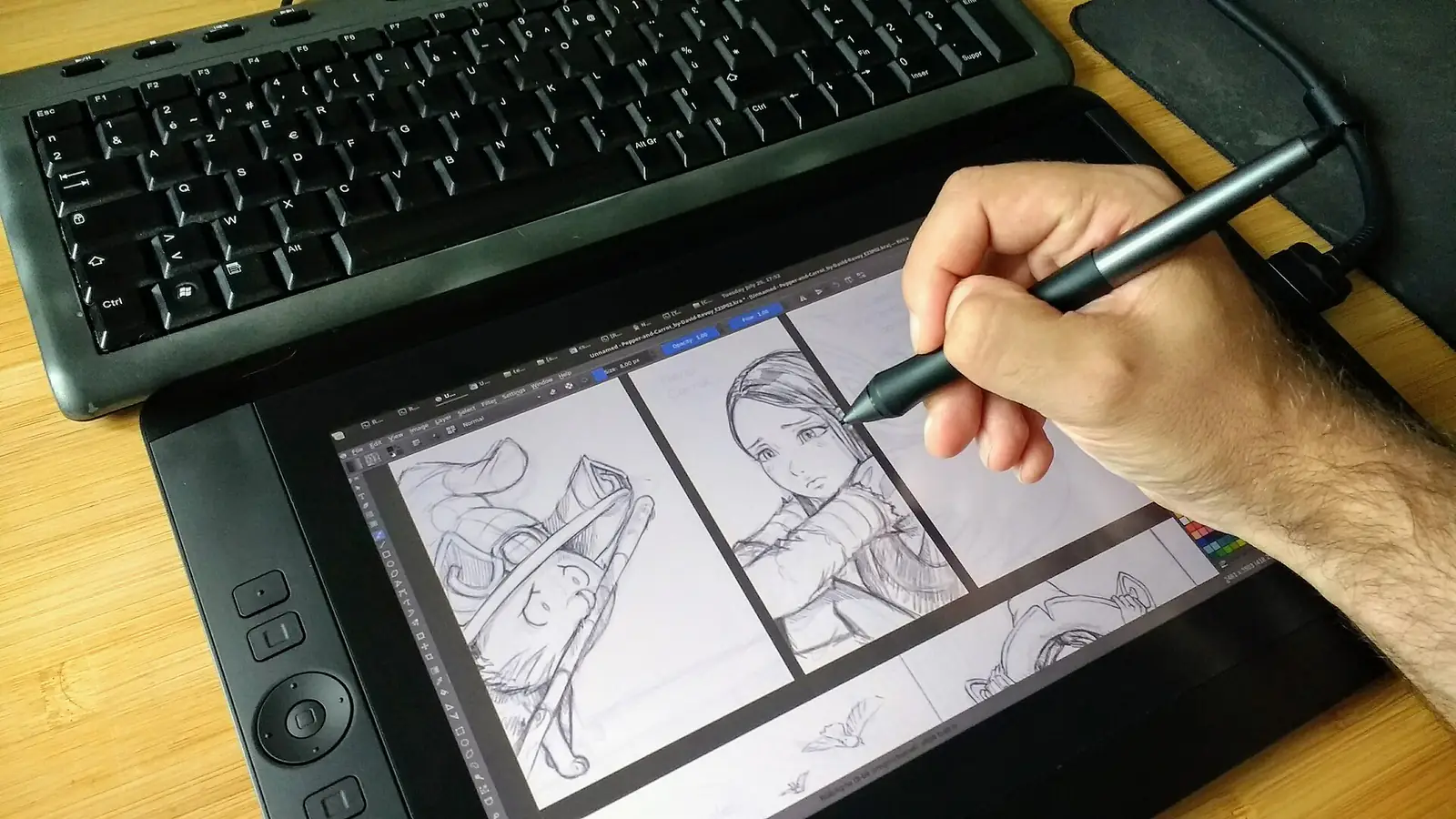
Glaze and Nightshade are free tools from a University of Chicago research team that change an image’s pixels in ways people barely notice but AI image models do: Glaze tries to stop a model from learning to copy an artist’s style, and Nightshade tries to corrupt what a model learns from scraped images. Both were published at major security conferences, Glaze at USENIX Security 2023 and Nightshade at IEEE Security and Privacy 2024. A 2024 study by researchers from ETH Zurich and Google DeepMind found that simple tricks such as upscaling can strip such protections, so artists should treat them as one layer of defense, not a guarantee.
Why artists turned to technical tools
Text-to-image models such as Stable Diffusion and Midjourney learn from very large collections of images gathered from the web. Once trained, a model can be fine-tuned on a few dozen images by one artist and then produce new pictures “in the style of” that person. The Glaze paper describes this as style mimicry and says it threatens the income of many working illustrators.
Legal routes are slow and uncertain. Lawsuits over training data are still moving through courts in several countries, and copyright law generally protects specific works, not a style. That gap is why the Chicago team, led by computer scientists Ben Zhao and Heather Zheng, built tools that artists can apply before posting their work. For the wider debate over AI art, see our explainer on AI art and the creative debate.
How Glaze works
Glaze adds what its authors call a “style cloak”: a small, carefully computed change to every pixel. The change is optimized so that, to the feature extractor inside an image model, the artwork appears to be in a different style, while to a human it looks almost the same.
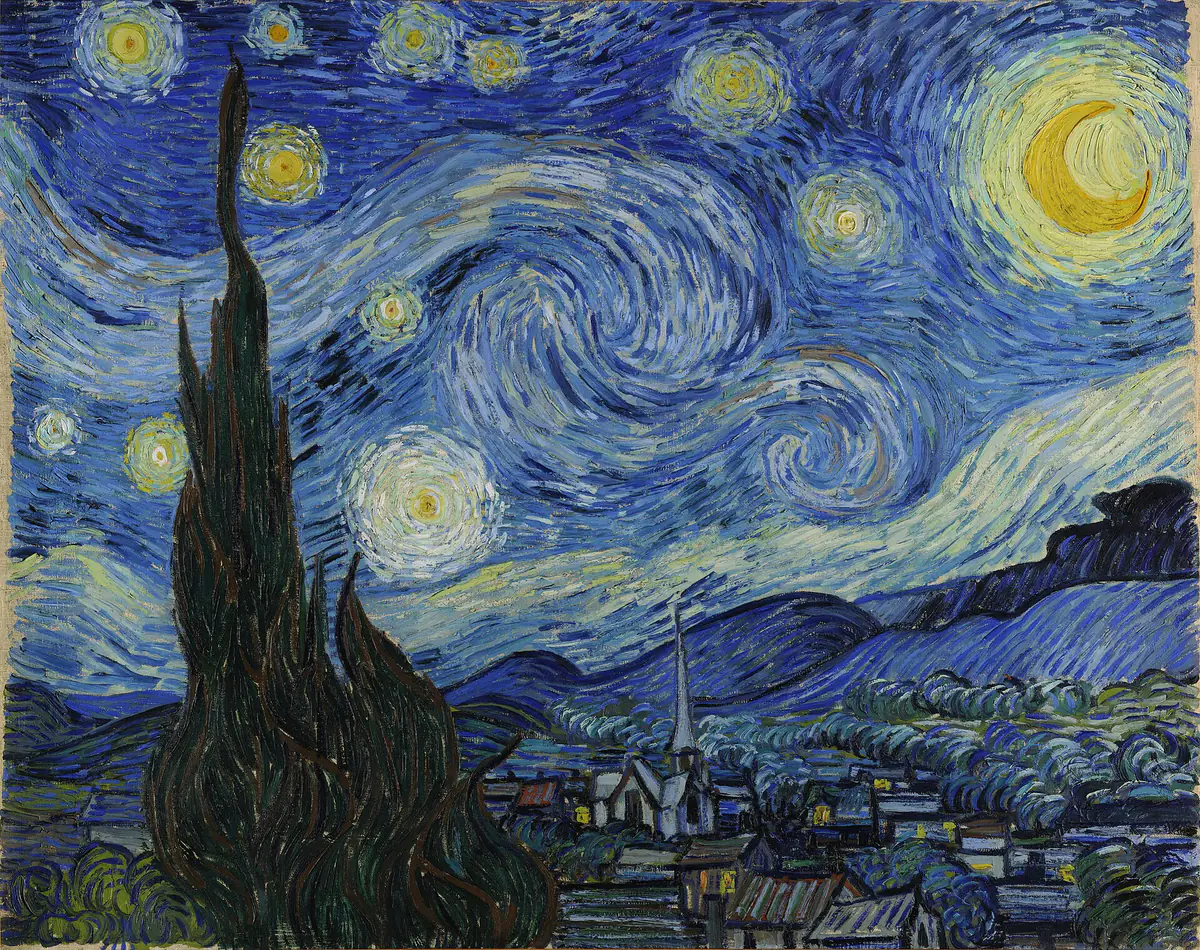
If someone later fine-tunes a model on cloaked images, the model learns the wrong style. Prompts asking for the artist’s style then produce images that drift toward the decoy style instead.
In the paper, the team reported results from user studies with more than 1,000 artists. Even at a low perturbation level, Glaze disrupted mimicry in more than 92% of cases under normal conditions and more than 85% against adaptive countermeasures, according to both surveyed artists and automated CLIP-based scores. Those figures come from the authors’ own evaluation, which was peer-reviewed for USENIX Security 2023.
The trade-off is visible artifacts. Stronger cloaks protect more but can leave faint patterns, especially on flat colors and clean line art, so artists choose an intensity that balances protection against how the image looks.
How Nightshade works
Nightshade, described in a paper accepted at IEEE Security and Privacy 2024, is offensive rather than defensive. Instead of protecting one artist’s style, it poisons training data.
A Nightshade image looks like, say, a dog, and is captioned as a dog, but its pixels are optimized so that a model learning from it absorbs features of something else, such as a cat. The paper’s key insight is that although training sets contain billions of images, the number of images for any single concept is much smaller. That makes “prompt-specific” poisoning feasible.
The authors report that fewer than 100 poisoned samples could corrupt a prompt in Stable Diffusion SDXL in their experiments, that the damage “bleeds through” to related concepts, and that many attacks combined could destabilize a model more broadly. They present Nightshade as a deterrent: if scraping unlicensed images carries a risk of poisoning, model developers have a reason to respect opt-outs or pay for licensed data. Our glossary entry on data poisoning explains the wider family of attacks.
Where the protections break
In June 2024, Robert Hönig, Javier Rando, Nicholas Carlini and Florian Tramèr published “Adversarial Perturbations Cannot Reliably Protect Artists From Generative AI.” They tested popular protections, including Glaze, and concluded that they give “a false sense of security.”
Their main findings:
- Low-effort countermeasures work. Off-the-shelf steps such as image upscaling, applied before fine-tuning, were enough to build mimicry methods that significantly degraded the protections.
- A user study confirmed it. In their study, all existing protections could be bypassed, leaving artists open to style mimicry.
- Protection is frozen in time. An image cloaked today is attacked by tomorrow’s models and purification methods. Once an image is posted and scraped, the artist cannot update its protection.
The authors urged non-technical solutions such as regulation and licensing instead. Because both protections and attacks keep evolving, results from any single study can age quickly. The practical lesson is that cloaking raises the cost of mimicry, but it does not reliably stop a determined person.
Other ways artists can protect their work
Technical cloaks work best alongside other measures:
| Measure | What it does | Main limit |
|---|---|---|
| Glaze | Disrupts style mimicry from fine-tuning | Can be removed by preprocessing; visible artifacts at high strength |
| Nightshade | Poisons models trained on scraped images | Needs many users to have broad effect; does not protect one image |
| robots.txt rules (GPTBot, Google-Extended) | Tells named AI crawlers not to use your site for training | Only covers crawlers that honor it and only your own site |
| Content Credentials (C2PA) | Attaches a signed record of who made an image and how it was edited | Records provenance; does not block training |
| Licensing and contracts | Sets terms for any paid use of your work | Requires enforcement |
For robots.txt, OpenAI says disallowing its GPTBot crawler signals that a site’s content should not be used to train its foundation models, separately from its OAI-SearchBot search crawler. Google offers a Google-Extended token that site owners can block to control use of their content for its Gemini models. Neither covers copies of your work posted elsewhere. For how provenance labels and watermarks really work, read our guide to AI detectors, watermarks and Content Credentials.
What to watch next
- New peer-reviewed tests of cloaking tools against the latest image and video models.
- Court rulings on whether training on scraped artwork requires a license.
- Wider adoption of Content Credentials by image platforms and portfolio sites.
- Opt-out registries that AI developers commit to honoring.
Key takeaways
- Glaze adds a near-invisible “style cloak” so models fine-tuned on an artist’s work learn the wrong style.
- Nightshade poisons training data, making a model misassociate concepts; its authors report effects from fewer than 100 images per prompt.
- A 2024 study found simple steps like upscaling can bypass these protections.
- Cloaking works best combined with robots.txt opt-outs, provenance labels and licensing terms.
- No tool can protect images that have already been scraped.
Frequently asked questions
Does Glaze stop AI from training on my art?
No. Glaze does not prevent scraping or training; it aims to make a model fine-tuned on your images learn a distorted version of your style. Researchers have shown that some preprocessing steps can weaken that effect.
Is Nightshade legal to use?
Nightshade changes your own images before you post them, which is generally your right as the creator. Whether its effect on someone else’s model could create legal disputes has not been tested in court; seek legal advice for specific cases.
What is the most reliable way to keep my art out of AI training?
No method is fully reliable. Combining robots.txt rules for AI crawlers, platform opt-out settings, clear licensing terms and tools such as Glaze offers more protection than any single step.