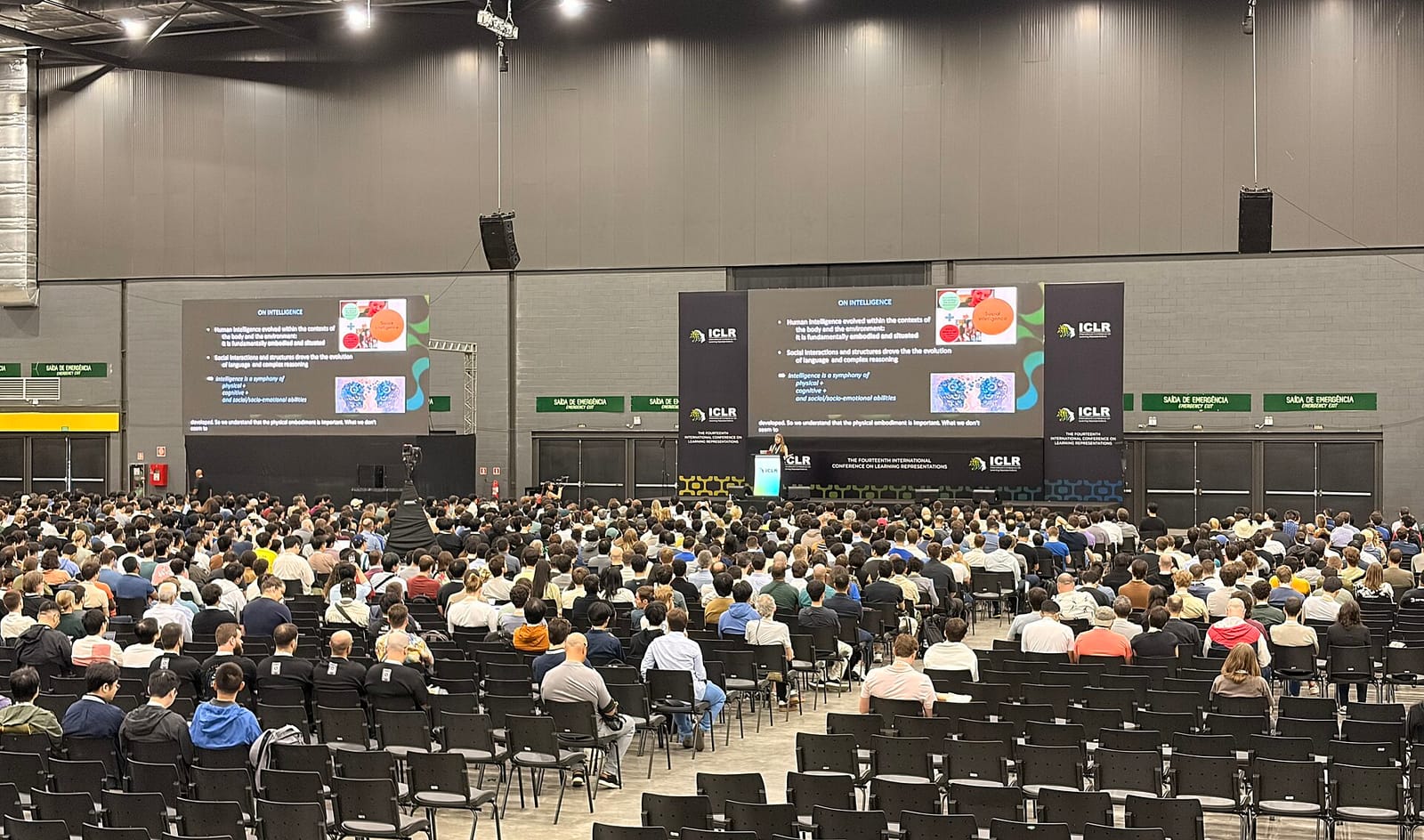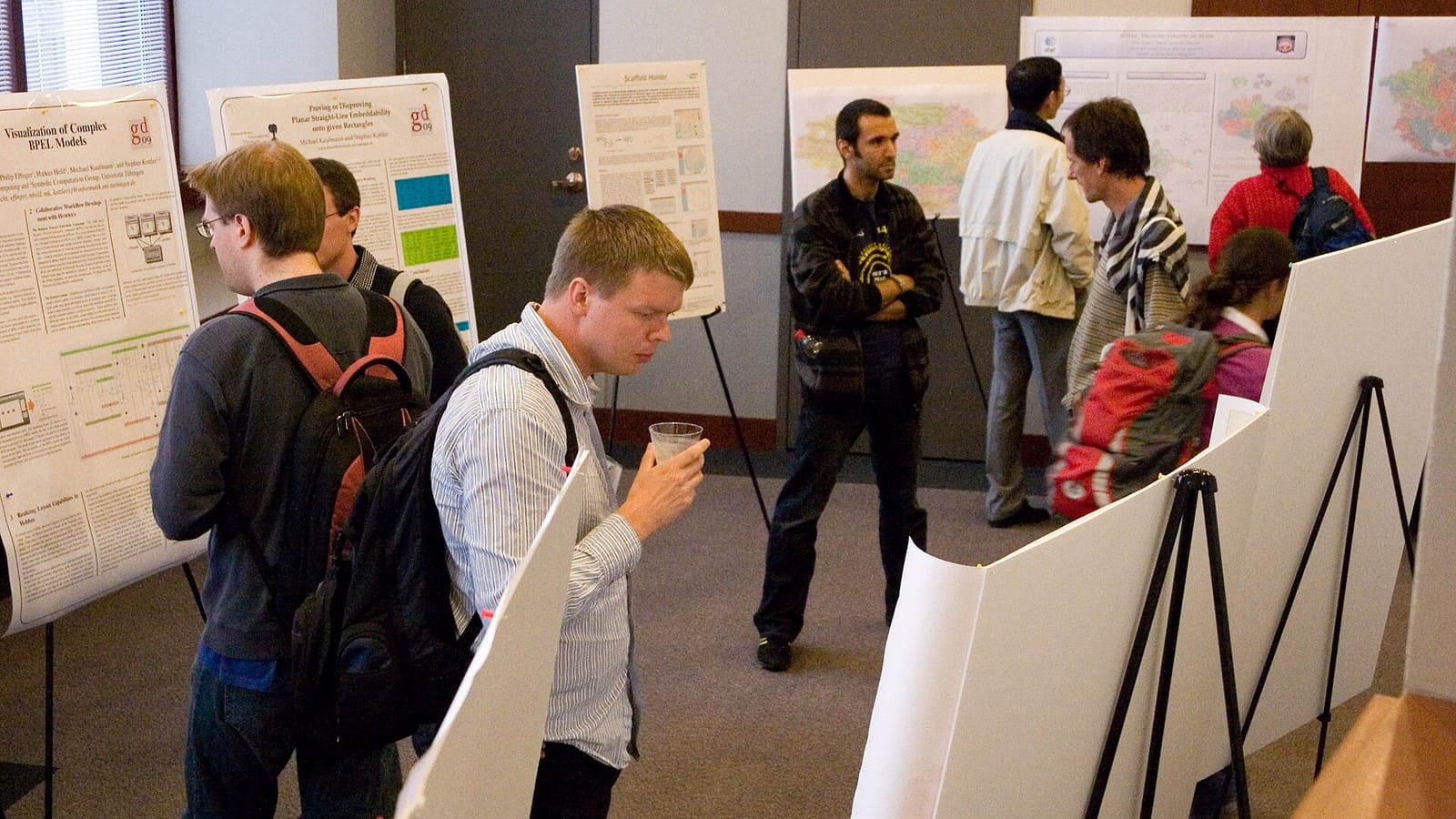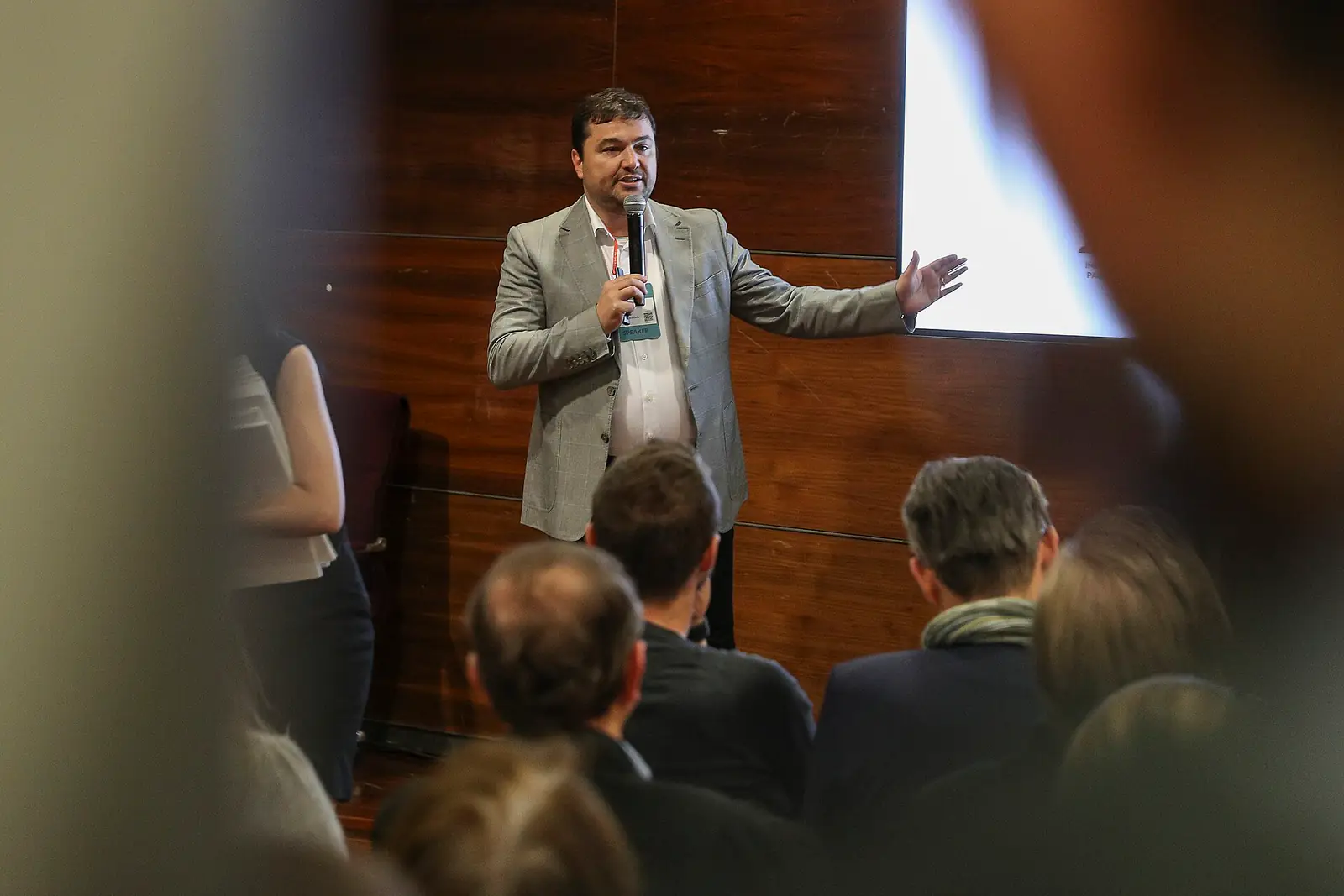
NeurIPS 2026, the 40th Conference on Neural Information Processing Systems, opens in Sydney on Sunday, December 6, and runs until December 12, with official satellite sites in Atlanta and Paris from December 9 to 13. It is the first edition of the field’s largest research meeting to be split across three continents, each with its own invited speakers: six in Sydney, four in Paris and three in Atlanta. It is also the year NeurIPS is running a formal, randomized experiment on reviewers using large language models. This guide collects what the organizers have published so far.
Dates and locations
The organizers’ October newsletter gives the schedule for each site:
- Sydney, Australia (main conference): Sunday, December 6, to Saturday, December 12.
- Atlanta, United States (satellite): Wednesday, December 9, to Sunday, December 13.
- Paris, France (satellite): Wednesday, December 9, to Sunday, December 13.
Each site has its own registration and pricing page on neurips.cc. Early registration closed on October 30. The conference site says that after processing reserved author registrations and waitlist requests for Sydney and Atlanta, it reopened registration to the general public for the remaining places. Paper locations have already been assigned, so authors know where they will present. Organizers have also warned that they have no partnership with any third-party service collecting registration or housing details, and that the official website is the only authorized channel.
Main Track, Evaluations and Datasets Track and Journal Track papers are presented across all three sites. Our entry for NeurIPS 2026 in the events directory keeps the dates in one place, and our AI conferences calendar lists what comes next, from CES to ICLR 2027.
The invited speakers, site by site
The organizers describe a different accent at each site: science in Sydney, mathematics in Paris and society in Atlanta. The full lineup, as published on the NeurIPS blog, is below. Times are local.
Sydney (December 8–10)
- Tie-Yan Liu, founding president of Zhongguancun Academy in Beijing, on building an “industrial learning loop” from real-world experience (Dec 8, 9:00am).
- Barbara Engelhardt of Gladstone Institutes and Stanford University, on models for structured biomedical data (Dec 8, 2:00pm).
- Satinder Singh, on reinforcement learning as an approach to alignment and on broadly competent autonomous agents (Dec 9, 9:00am).
- Cheng Soon Ong of CSIRO, on adaptive experimental design for scientific discovery, validated in a genomics lab (Dec 9, 2:00pm).
- Shannon Vallor of the University of Edinburgh, on generative AI as an engine of both knowledge production and “epistemic dispossession” (Dec 10, 9:00am).
- José Hernández-Orallo of Cambridge’s Leverhulme Centre for the Future of Intelligence, on the shift from aggregate benchmark scores to capability profiles (Dec 10, 2:00pm).
Paris (December 9–11)
- Ulrike von Luxburg of the University of Tübingen, on whether post-hoc explanations can meet the needs of the EU AI Act (Dec 9, 2:30pm).
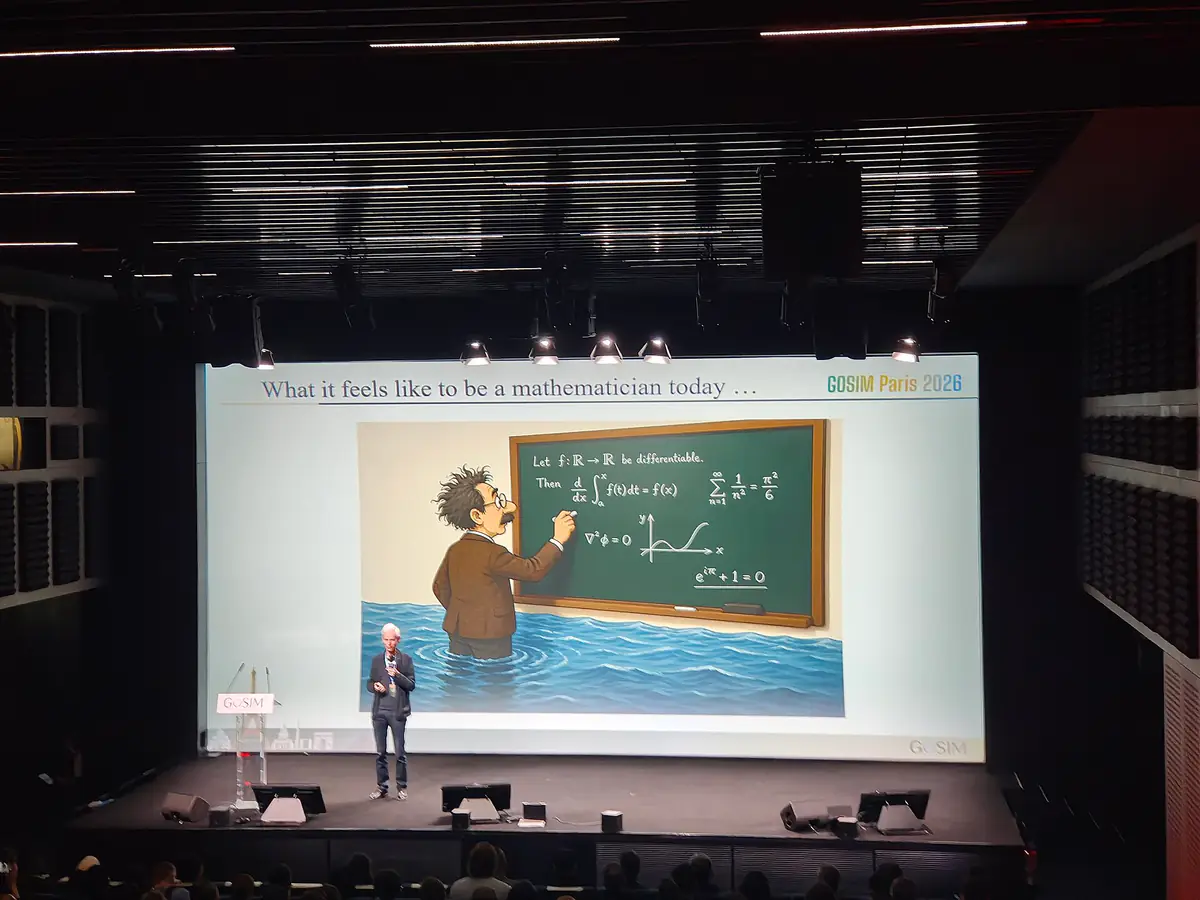
- Timothy Gowers, Fields Medalist at the Collège de France, asking whether mathematics is “solved” (Dec 10, 8:30am).
- Claire Monteleoni of INRIA Paris, on machine learning for climate science (Dec 10, 2:30pm).
- Pelonomi Moiloa, CEO of Lelapa AI, on building AI under constraint with smaller, efficient models (Dec 11, 10:30am).
Atlanta (December 9–11)
- Ayanna Howard, roboticist and president of Spelman College, on physical AI and the future of work (Dec 9, 9:00am).
- Stefanie Jegelka of TU Munich, on machine learning for discrete and combinatorial structures (Dec 10, 9:00am).
- Sasha Luccioni of Sustainable AI Group, on community opposition to AI data centers and their effects on grids and the environment (Dec 11, 9:00am).
Gowers’ talk is likely to draw particular attention. It was scheduled weeks before an Anthropic mathematician claimed a Lean-checked proof of the Riemann hypothesis found with Claude, and its abstract argues that mathematics can remain far from solved even if machines become faster than people at solving problems.
The AI-assisted reviewing experiment
The most consequential change this year happened before the conference. NeurIPS ran a voluntary experiment on how reviewers use language models during peer review. Authors chose at submission whether to include their paper, and reviewers volunteered separately. For each eligible reviewer-paper pair, a random assignment placed the review in one of three conditions:
- No LLM assistance. The reviewer works alone and must not use outside AI tools for that paper.
- Open-ended assistance. A custom assistant inside OpenReview answers whatever the reviewer asks.
- Structured assistance. The assistant volunteers paper-specific help and structures its output for easier reading.
Area chairs, who do not know which condition applied, rate the quality and helpfulness of each review. The organizers say the models run with zero data retention, that interactions are monitored for relevance, and that the study was reviewed by ethics boards at several institutions. Outside the experiment, NeurIPS forbids LLM use in reviewing and warns that violations can lead to desk rejection of the reviewer’s own papers. The results should be the first large randomized evidence on whether AI help makes peer review better or worse.
What else is new
- Journal Track: 88 papers from journals are being presented at the conference, 64 from TMLR, 16 from JMLR and 8 from the Annals of Statistics.
- Bridging the Future grants: six projects that broaden participation in AI education were selected from 134 applications.
- Regional links: the organizers are connecting the Sydney meeting with the Australasian AJCAI 2026 and ACML 2026 conferences.
- Eligibility clarification: after an error in the handbook linked to a broader US sanctions tool than NeurIPS must follow, organizers apologized and restated that participation rules match those of ACM and IEEE.
For first-time attendees, our guide on how to get the most out of an AI conference covers planning poster sessions, workshops and meetings.
What to watch next
- Whether the three-site format increases total attendance or splits the community.
- First results from the AI-assisted reviewing experiment, expected after the review cycle is analyzed.
- Test-of-time and outstanding paper awards announced during the Sydney week.
- Workshops and talks on AI-assisted mathematics and evaluation after this week’s proof claims.
Key takeaways
- NeurIPS 2026 runs December 6–12 in Sydney, with Atlanta and Paris satellites December 9–13.
- Thirteen invited speakers are split across the sites, including Timothy Gowers, Shannon Vallor and Sasha Luccioni.
- A randomized experiment tested no, open-ended and structured LLM help for reviewers.
- The Journal Track brings 88 journal papers to the conference.
Frequently asked questions
Where is NeurIPS 2026 held?
The main conference is in Sydney, Australia, from December 6 to 12. Official satellite sites run in Atlanta and Paris from December 9 to 13.
Can I still register for NeurIPS 2026?
The conference reopened registration to the public for remaining places after processing author and waitlist requests. Availability and prices are listed separately for each site on neurips.cc.
Does NeurIPS allow reviewers to use ChatGPT or other LLMs?
Only inside its official experiment, through a provided assistant in OpenReview. Any other LLM use in reviewing violates NeurIPS policy and can lead to penalties, including desk rejection of the reviewer’s papers.