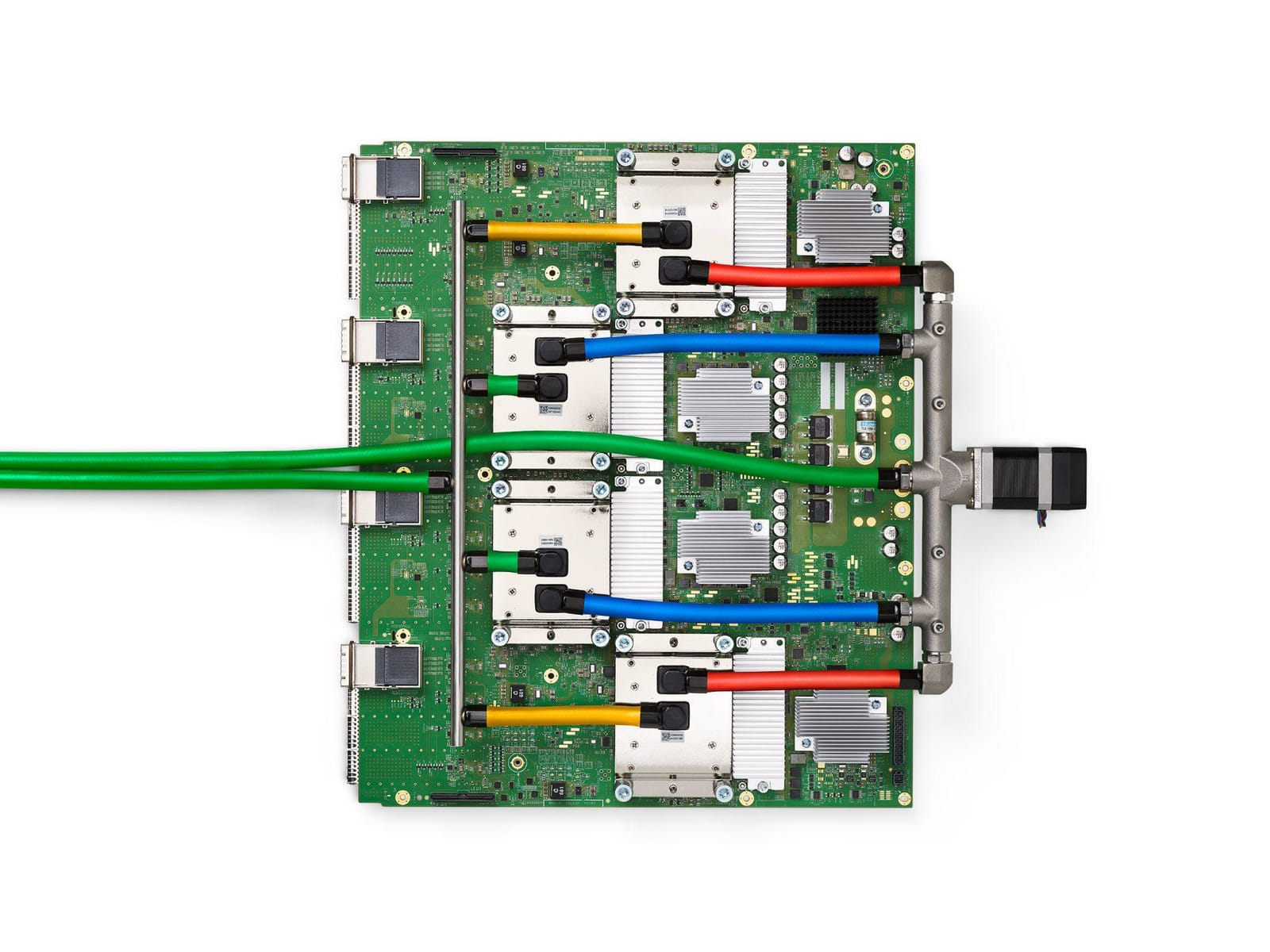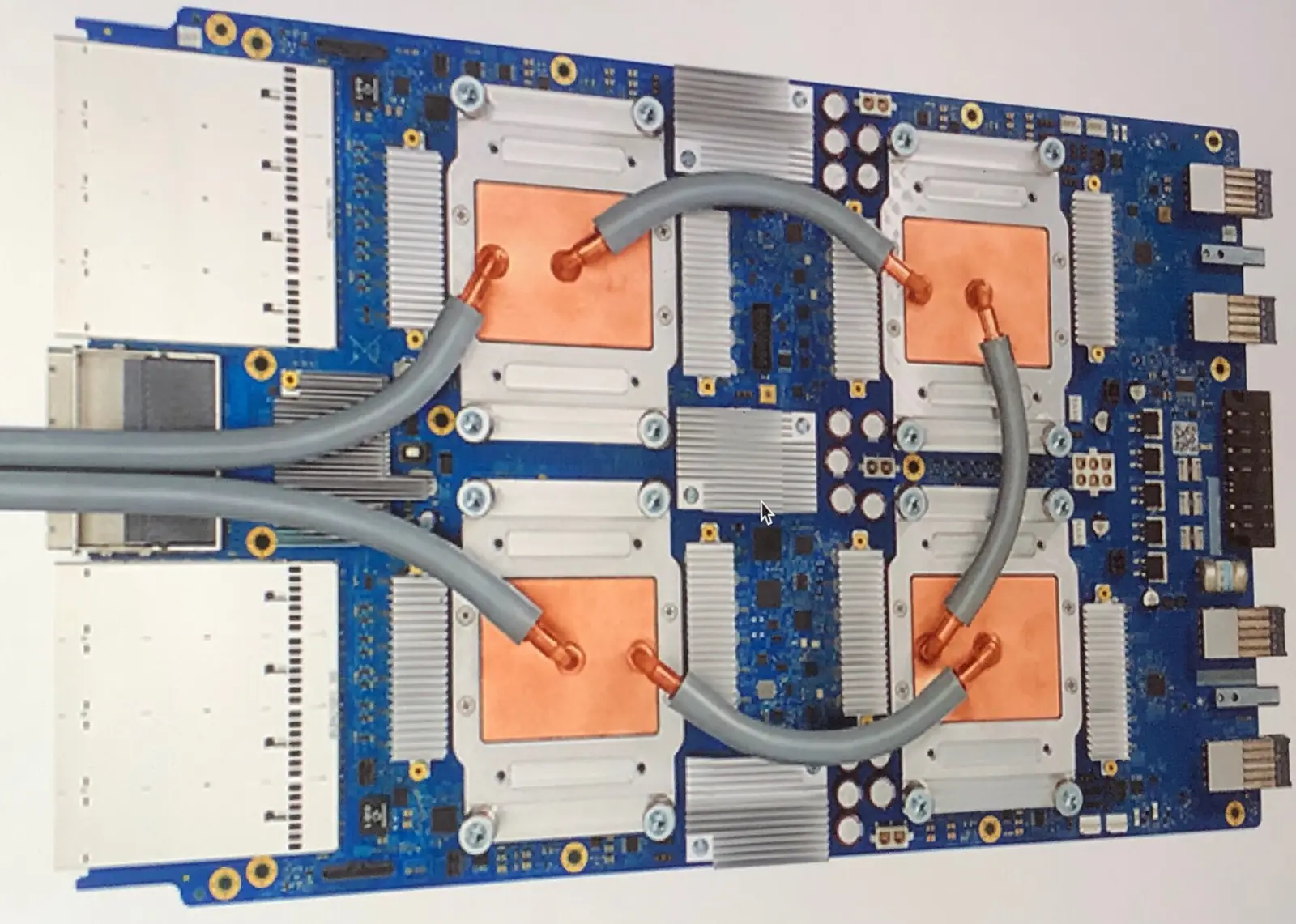
Google has added two systems to its eighth generation of tensor processing units: TPU 8tx, built for confidential inference and private fine-tuning, and TPU 8i Max, which packs two inference chips into one package for very long context windows. The company announced them on Monday, November 9, calling it the first time it has introduced four TPU systems in a single year. Google says TPUs now have nearly 100 customers, from frontier labs to trading firms and universities.
What Google announced
The eighth generation began in April at Google Cloud Next with two chips: TPU 8t for large-scale training and TPU 8i for low-latency reasoning. Google says those deliver up to 2.7 times better training performance and 80% better inference price-performance than the previous generation. The two new systems reuse that silicon in new configurations rather than introducing new chip designs.
Google draws the distinction itself. Designing a chip takes years, while a system is about how compute, memory, networking and security are packaged around the chip. Because the TPU platform was built to be modular, the company says, it can assemble specialized machines in months.
TPU 8tx: confidential computing on TPUs
TPU 8tx uses the same silicon as TPU 8t, paired with 5th Generation AMD EPYC host processors, and adds hardware-level confidential computing. Data is normally encrypted at rest and in transit but has to be decrypted in memory while a computer works on it. TPU 8tx is designed to keep data and model weights protected and isolated even while in use. Google pitches it at regulated companies and governments that want to run frontier or proprietary models next to their most sensitive data.
It also borrows the low-latency “Boardfly” network built for TPU 8i, which Google says gives up to 2x lower latency than TPU 8t with a near-zero performance penalty from the security features. Because it combines training-grade compute with a fast inference network, a team can fine-tune a model on private data, distill a large model into a smaller one and run reinforcement learning for agents on one system, without moving sensitive data between clusters.
TPU 8i Max: aimed at the memory wall
TPU 8i Max combines two TPU 8i chips on one package. Google says it doubles the compute, the on-chip SRAM and the high-bandwidth memory bandwidth of a TPU 8i, and fits twice the silicon in the same rack footprint. The target is the “memory wall”: when many agents work across a large codebase or hours of video, moving data to the processor becomes the bottleneck rather than arithmetic. Google did not publish absolute memory capacities or prices in the announcement.
The software around the chips
Most of the announcement is about software that makes TPUs easier to adopt outside Google. It builds on TorchTPU, the native PyTorch backend open-sourced last month, and adds an open-source TPU agent suite in preview that plugs into coding tools such as Claude Code, Cursor and Google Antigravity. Google is also open-sourcing an XLA Serving Engine for low-latency C++ serving across TPUs, GPUs and CPUs, and TPU Sync, a layer that tiers KV caches across chip memory, host memory and storage; Google says it cuts KV transfer latency and time to first token by more than 90%. Cloud Pathways and GKE dynamic slicing are now generally available.
How it compares with Nvidia and other in-house chips
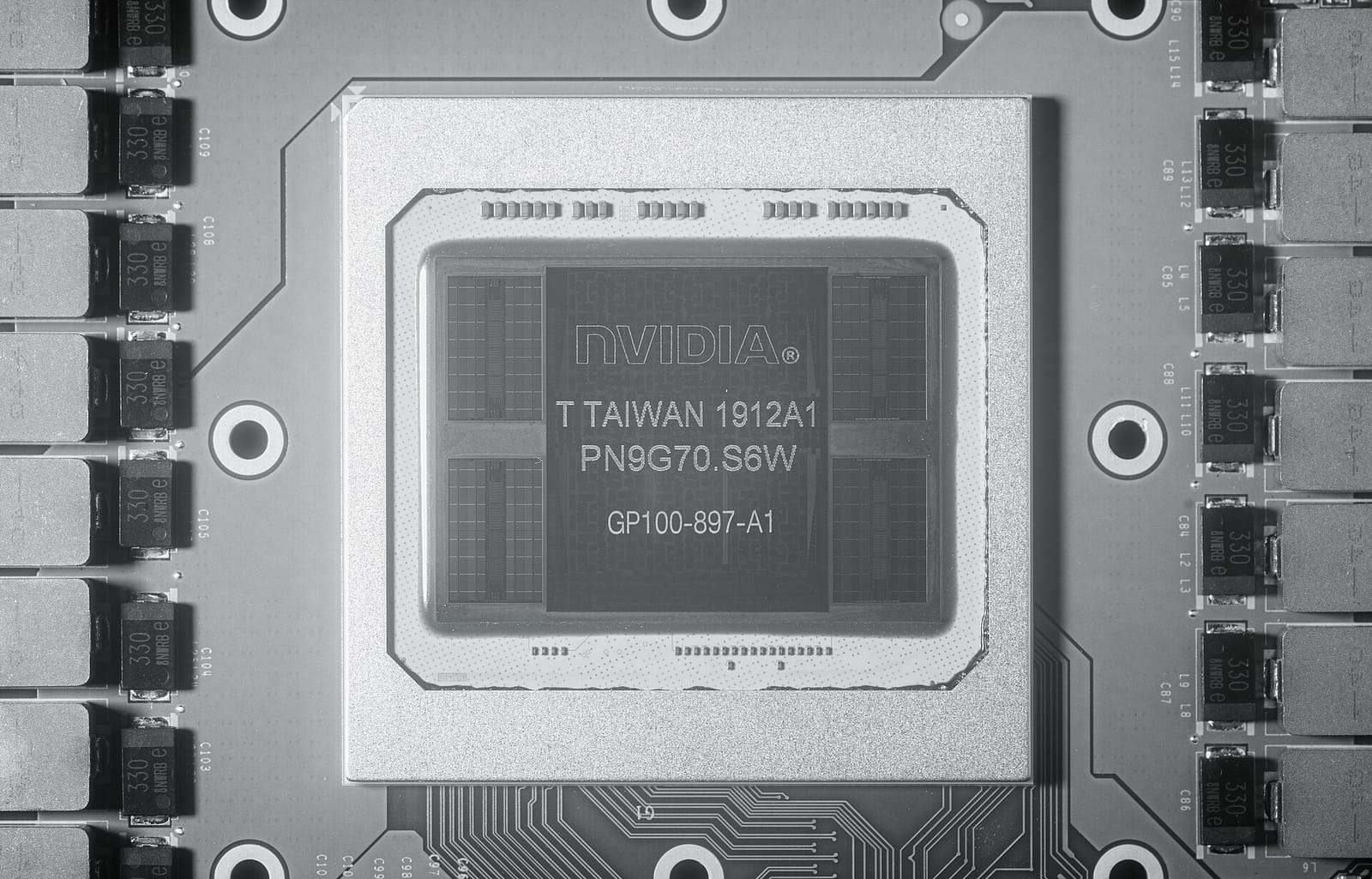
The move fits a wider push by cloud providers to depend less on Nvidia. Microsoft and Amazon have their own accelerators, and TechCrunch notes that OpenAI and Anthropic are also working on custom silicon. Two points stand out in Google’s approach. First, confidential computing is already a feature of Nvidia’s recent data-center GPUs, so TPU 8tx brings Google to parity for customers who need it rather than opening a new category. Second, Google is selling specialization: four systems tuned for training, reasoning, security and long context, where Nvidia sells a smaller number of general-purpose parts used for everything. Our explainer on GPUs, TPUs and NPUs covers why that trade-off exists.
The claims about price-performance on the InferenceX and AgentX benchmarks come from Google and have not been reproduced independently. Customers will judge the new systems on availability, regional coverage and price, none of which Google detailed.
What to watch next
- Pricing and regional availability for TPU 8tx and TPU 8i Max on Google Cloud.
- Independent benchmark results for long-context inference on TPU 8i Max.
- Which regulated customers or governments adopt TPU 8tx first.
- Uptake of the TPU agent suite and TorchTPU among PyTorch developers.
Key takeaways
- Google added TPU 8tx and TPU 8i Max to its eighth-generation TPU portfolio on November 9, 2026.
- TPU 8tx pairs TPU 8t silicon with AMD EPYC hosts for confidential inference and private fine-tuning.
- TPU 8i Max doubles compute, SRAM and memory bandwidth by combining two TPU 8i chips in one package.
- Google paired the hardware with open-source software, including TPU Sync and an XLA Serving Engine.
- Prices and independent performance data were not part of the announcement.
Frequently asked questions
What is TPU 8tx?
TPU 8tx is a Google Cloud TPU system built on TPU 8t silicon with AMD EPYC hosts. It keeps data and model weights protected while in use, so regulated organizations can run and fine-tune models on sensitive data.
What is the difference between TPU 8i and TPU 8i Max?
TPU 8i is Google’s inference chip for low-latency reasoning. TPU 8i Max combines two of those chips in one package, doubling compute, SRAM and memory bandwidth for very long context windows.
Can I run PyTorch on Google TPUs?
Yes. Google open-sourced TorchTPU in October, which lets PyTorch code and Hugging Face models run natively on TPUs, and inference engines such as vLLM and SGLang have TPU backends.