METR, the AI evaluation nonprofit behind the widely shared “time horizon” chart, published a major update on November 20, 2026. Testing public models up to Claude Opus 5.5 and GPT-6 Astra, it finds that the length of tasks frontier AI agents can complete is doubling roughly every 3.6 months, with estimated time horizons of up to 27 hours on the verifiable part of a new, harder task suite. The same report finds that on tasks requiring judgment without clear feedback, AI agents still do worse than human experts. The report is a research post, not a peer-reviewed paper.
What METR measured, and what changed
METR’s original 2025 paper, Measuring AI Ability to Complete Long Tasks, rated each task by how long it took skilled humans to finish and then reported the task length at which a model succeeds 50% of the time. That number is the model’s time horizon. When the metric launched in March 2025, the best model scored around one hour. The new report says models had saturated that suite, TH1.1, within a year, even though it includes tasks of up to 30 hours.
So METR built a harder suite, TH2, aimed at skills relevant to automating AI research and development. It has two parts:
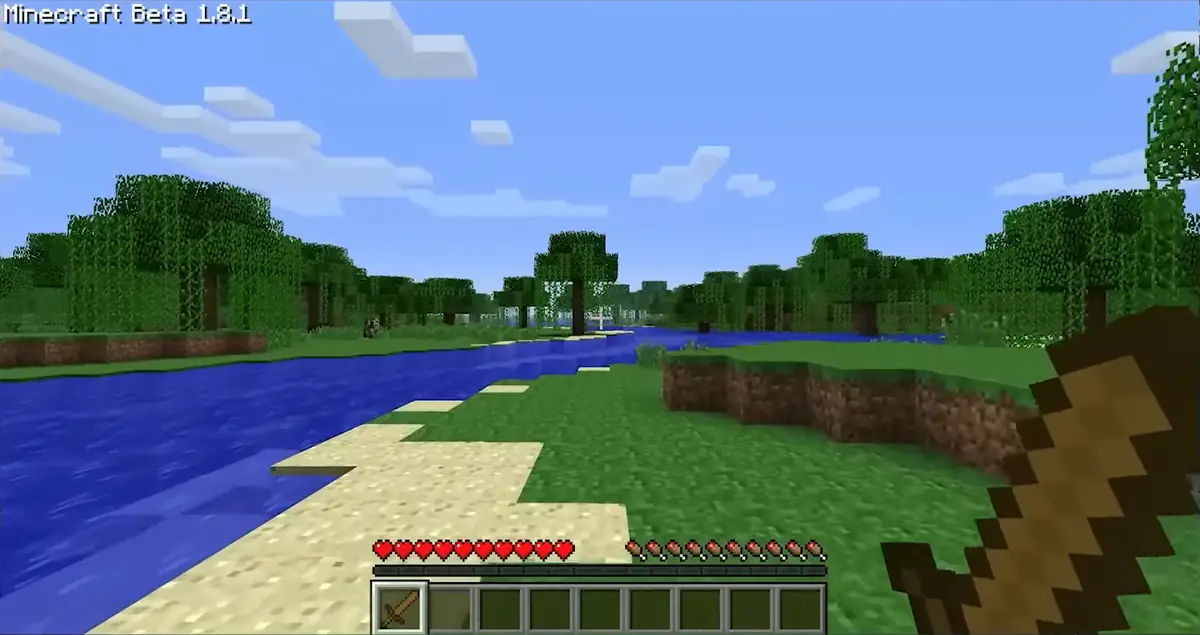
- Verifiable tasks with an automatic score, such as 15 heuristic optimization problems from Al Zimmermann’s Programming Contests, optimizing a NanoGPT training script on a budget, building a bot that beats Minecraft and finding starting boards in Conway’s Game of Life.
- Hard-to-verify, judgment-heavy tasks, such as building an evaluation task METR itself would find useful, reconstructing an investigation into colluding agents, and rating critiques of philosophical arguments against expert ratings.
Two methodological changes matter. METR recruited more experienced baseliners than the STEM graduates it used before, and allowed them to use an AI coding assistant. Because those people were hard to find, direct human baselines underpin only 9% of task-length estimates; the rest are estimated from public records, expert input and extrapolation. Many tasks also now have several score thresholds rather than one pass mark.
The main findings
Models now match or beat skilled humans on coding and optimization. On the three TH2 tasks where METR collected human baselines, current frontier models beat the people it recruited. On the programming contests, the median placement of the strongest models (Claude Fable 5.1, Opus 5.5 and GPT-6 Astra) was between the 96th and 98th percentile of human entrants, with models given 48 hours on a 28-core machine against roughly three months for human contestants.
Time horizons keep growing exponentially. On the combined TH1.1 and TH2 suites the doubling time is about 3.6 months. METR notes that the doubling looks shorter on the verifiable subset of TH2 alone, which could indicate a recent acceleration, but says there are other plausible explanations. A separate composite measure, the METR Capability Index, shows no clear acceleration or slowdown across the public frontier, with some uncertain developer-specific changes.
Judgment is the weak spot. On tasks where choices must be made without fast empirical feedback, METR writes that AI agents “appear to have worse judgment than human experts.” MIT Technology Review reports that none of the AI-designed evaluations was judged useful enough for METR’s research, although the newest models now reach what METR calls “borderline above the bar.” On the philosophy-critique benchmark, many models beat experts who spent 5 minutes per item, but none matched experts who spent 15 minutes.
Costly tasks are harder, but progress is similar. METR introduces a “lifecycle cost” estimate for how expensive a task is to build, run and score. In its data, doubling that cost has roughly the same effect on difficulty as halving a model’s time horizon. Yet models improve at similar rates on cheap and costly tasks.
Why the measurement problem matters
The report’s title makes its central worry explicit: capabilities relevant to AI R&D are improving quickly and getting harder to measure. METR argues that cheap, containerized evaluations increasingly resemble the reinforcement learning environments labs train on, so they risk overstating real-world ability. Our explainer on reinforcement learning with verifiable rewards describes why models improve fastest exactly where answers can be checked automatically.
METR also says current public evidence is “insufficient to rule out drastic AI R&D acceleration in the next couple of years,” meaning progress so fast that humans can no longer assess the risks of new systems. That links the report to debates about recursive self-improvement. The finding that judgment lags is the main brake METR identifies, and it is also the hardest thing to measure.
The report lands the same week an Anthropic mathematician claimed a Lean-checked proof of the Riemann hypothesis found with Claude, a case where the final result is machine-verifiable but choosing the approach required exactly the kind of research judgment METR finds hardest to score.
Limitations
METR is candid about weak points. Most task lengths are estimates rather than measured human times. Judgment tasks are few, partly scored by humans or model judges, and METR found that model judges overrate outputs from models as strong as or stronger than themselves. Its human baseliners may not represent top AI lab researchers. And the authors caution that trends on hard-to-verify tasks are unlikely ever to be as clean as those on easy-to-specify ones. Our METR time horizon benchmark page explains the original metric and how to read it.
What to watch next
- Whether independent groups reproduce the 3.6-month doubling on their own long-horizon tasks.
- More judgment-heavy tasks in future METR updates, and whether “borderline” results cross the bar.
- How labs respond to the claim that evaluations and training environments are converging.
- Use of the report in policy debates about AI R&D automation thresholds.
Key takeaways
- METR’s November 2026 update finds time horizons doubling about every 3.6 months on its combined suites.
- Frontier models reach estimated horizons of up to 27 hours on verifiable TH2 tasks and place in the 96th–98th percentile on optimization contests.
- On judgment-heavy tasks without clear feedback, models still fall short of human experts.
- Only 9% of task-length estimates rest on direct human baselines, which adds uncertainty.
- METR says current evidence cannot rule out drastic AI R&D acceleration within a couple of years.
Frequently asked questions
What is an AI time horizon?
It is the length of task, measured by how long skilled humans take, that an AI agent completes successfully 50% of the time. A model with a 10-hour horizon succeeds on half of tasks that take people about ten hours.
Is METR’s report peer-reviewed?
No. It is a research post published on METR’s website. The original 2025 time horizon study is available as an arXiv preprint.
Which models did METR test?
The update covers public models up to Claude Opus 5.5 and GPT-6 Astra, including Claude Fable 5.1. METR names these three as the strongest on its optimization contests.