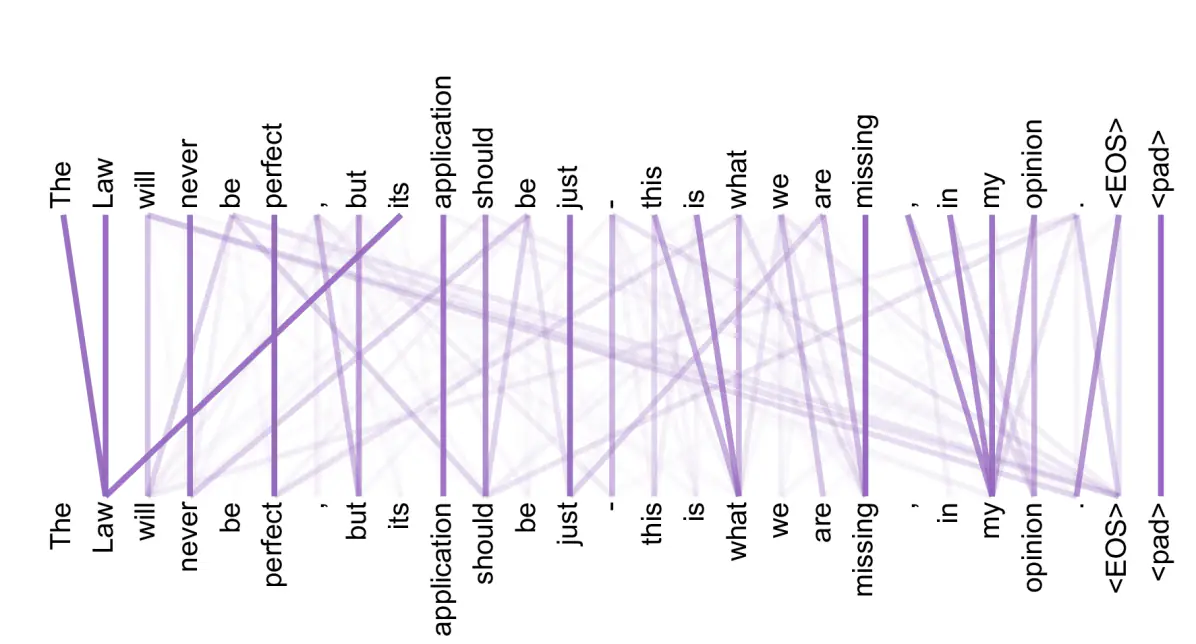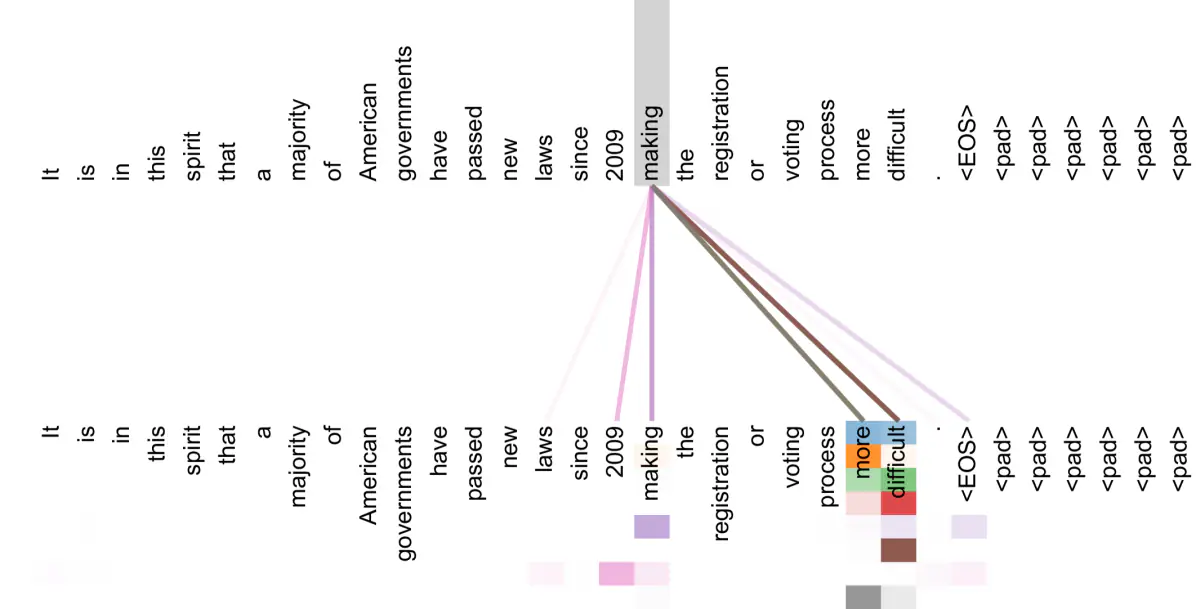
A looped transformer runs the same block of layers several times for each token, so a model gets deeper without getting bigger. The idea goes back to Alex Graves’s Adaptive Computation Time in 2016 and the Universal Transformer in 2018, and in November 2026 it reached production: Thinking Machines released the open-weight Inkling 2 Mini on November 20, and Z.ai launched the 750B-scale GLM-5.4 on November 23. This timeline explains how a research curiosity became a frontier-model design, and why it took eight years.
Why depth and parameters were tied together
In the original 2017 transformer from Attention Is All You Need, each layer has its own weights and runs exactly once. Doubling depth therefore doubles the parameters in those layers, the memory needed to store them and the data needed to train them. For most of the following decade, labs improved models mainly by growing both together.
Looping breaks that link. If one block of layers is applied twice, the model performs the computation of a network twice as deep while storing only one copy of the weights. The cost moves from memory to compute: each extra pass takes time. That trade-off explains both the appeal and the long delay.
2016: teaching networks how long to think
March 2016 — Adaptive Computation Time. In a paper on recurrent neural networks, Alex Graves introduced Adaptive Computation Time (ACT), a method that lets a network learn how many computation steps to take before producing an output. On synthetic problems such as parity, integer addition and sorting, performance improved dramatically. On character-level language modeling the gains were small, but the network spent more steps on hard-to-predict spots, such as spaces between words.
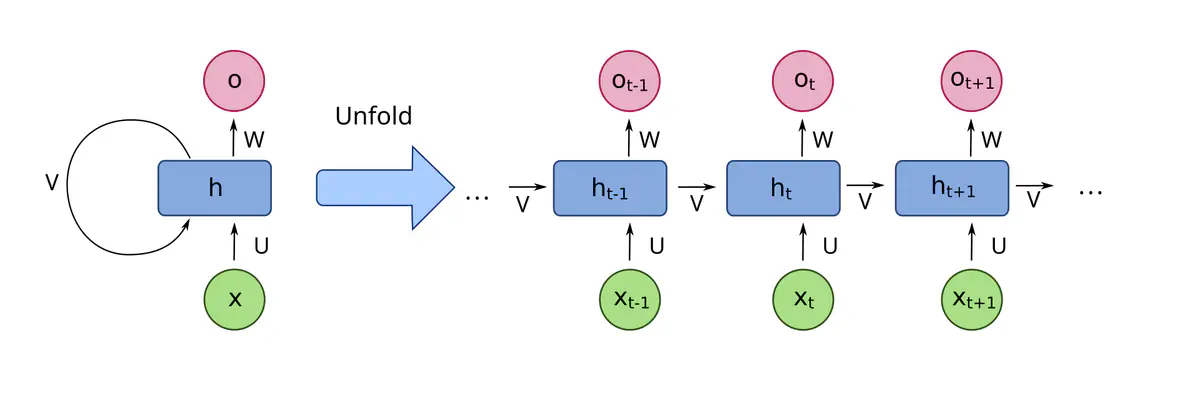
ACT introduced the central question looped models still ask: should every input get the same amount of computation?
2018–2019: the Universal Transformer and shared layers
July 2018 — Universal Transformers. Mostafa Dehghani, Stephan Gouws, Oriol Vinyals, Jakob Uszkoreit and Łukasz Kaiser proposed the Universal Transformer, which applies one transformer block repeatedly instead of stacking different ones. The authors described it as a parallel-in-time recurrent model. Their motivation was that standard transformers failed at simple tasks recurrent networks handled easily, such as copying strings or logical inference on inputs longer than those seen in training. The model combined repeated layers with ACT so each position could stop refining at its own pace.
September 2019 — ALBERT. Google researchers took a different angle with ALBERT, a smaller version of BERT. One of its two parameter-saving tricks was cross-layer parameter sharing: every layer used the same weights. ALBERT set state-of-the-art results on the GLUE, RACE and SQuAD benchmarks with fewer parameters than BERT-large, showing that shared layers could work at practical scale, even though the motivation was memory, not reasoning.
2023: looped transformers as computers
January 2023 — Looped Transformers as Programmable Computers. Angeliki Giannou and colleagues showed that a transformer with fixed, hand-set weights, placed in a loop, could act as a general-purpose computer. A 13-layer looped transformer, reading instructions from its input like a punch card, emulated a calculator, a basic linear algebra library and learning algorithms that use backpropagation.
The result was theoretical, but it reframed looping: repetition is not just a way to save parameters, it lets a fixed network run iterative algorithms for as many steps as needed.
2025: latent reasoning at scale
By 2025, reasoning models were spending thousands of extra output tokens on chain-of-thought. Several groups asked whether some of that “thinking” could happen inside the network instead.
February 2025 — recurrent depth. Jonas Geiping and colleagues trained a 3.5-billion-parameter model on 800 billion tokens around a recurrent block that can be unrolled to any depth at test time. They reported that its reasoning scores kept improving as they added iterations, up to a compute load equivalent to a 50-billion-parameter model, without special chain-of-thought training data.
February 2025 — the power of looped transformers. Nikunj Saunshi and colleagues at Google argued that many reasoning problems need depth more than parameters. On synthetic tasks such as addition and multi-hop induction, a k-layer transformer looped L times nearly matched a non-looped model with k×L layers.
October 2025 — Ouro. A large academic and industry team released Ouro, a family of looped language models pre-trained on 7.7 trillion tokens with a learned objective for how much depth to use. Its 1.4B and 2.6B models matched the results of models up to 12B on many benchmarks, and the authors attributed the gain to better manipulation of knowledge rather than more stored knowledge.
November 2026: looping reaches products
November 20, 2026 — Inkling 2 Mini. Thinking Machines Lab released a 26.4B-parameter open-weight model under Apache 2.0 that runs its middle layers three times per token, according to its model card. It is small enough for a 32GB Mac.
November 23, 2026 — GLM-5.4. Z.ai converted its pre-trained GLM-5 base into a loop transformer that runs 28 layers twice. Its technical blog names the Universal Transformer as the origin of the idea and gives a reason it took so long: looped models trained from scratch still lag ordinary ones at the same pre-training compute. Z.ai’s workaround was to adapt an existing base with continued training, adding per-token gates and a shared key-value cache to keep serving costs down.
What changed, and what has not
Three things made 2026 different from 2018. Reasoning workloads now reward depth over memorized facts. Inference cost, especially memory for long contexts, has become a main constraint, which favors fewer parameters. And labs found engineering fixes, such as cache sharing and gated updates, that make loops affordable to serve.
The open problem is the one Graves raised in 2016. Today’s production models loop a fixed number of times. Z.ai says it is still working on adaptive compute, so that harder tokens get more passes. GLM-5.4’s own “marathon thinking” problem, where it reasons for too long, shows that knowing when to stop remains unsolved.
What to watch next
- Production models that choose the number of loops per token, as ACT proposed in 2016.
- Independent benchmarks comparing looped models with same-size standard models.
- Inference engine support for looped layers in vLLM, llama.cpp and other runtimes.
- Whether larger labs convert existing base models into looped versions.
Key takeaways
- Looped transformers reuse the same layers several times per token, adding depth without adding parameters.
- The idea runs from Adaptive Computation Time (2016) through the Universal Transformer (2018) and ALBERT’s shared layers (2019).
- 2025 research showed looped models can match much larger standard ones on reasoning tasks.
- Inkling 2 Mini and GLM-5.4 brought looping into released models in November 2026.
- Deciding how many loops each token needs is still an open research question.
Frequently asked questions
What is the difference between a looped transformer and a deeper transformer?
A deeper transformer adds new layers, each with its own weights. A looped transformer runs the same layers again, so it performs similar extra computation while storing far fewer parameters.
Who invented the looped transformer?
The best-known starting point is the Universal Transformer, proposed in 2018 by Mostafa Dehghani and colleagues, which built on Alex Graves’s 2016 Adaptive Computation Time.
Are looped models better at reasoning?
Research from 2025 found looped models nearly match much deeper or larger models on many reasoning tasks. Independent tests of the large looped models released in 2026 are still pending.