Z.ai on Monday, November 23, released GLM-5.4, its first flagship model built as a loop transformer: it runs 28 layers of its 750B-scale GLM-5 base twice for every token. The Chinese lab claims the extra depth gives intelligence comparable to models with 2 to 3 trillion parameters, but it has published no benchmark table for the full model and the weights are not yet available. It is the second major looped model in a week, after Thinking Machines’ Inkling 2 Mini.
What Z.ai released
GLM-5.4 is available now inside Z.ai’s own products: the GLM Coding Plan subscription, the ZCode desktop agent and Z.ai Chat. A public API is listed as “coming soon,” and Z.ai says it plans to release the weights “responsibly after completing necessary safety hardening,” without a date.
The company frames the release around what it calls Generalized Coding: using code as the tool for tasks beyond software. Its demos include a self-narrated music video, a complete game, an interactive 3D scene built from math geometry and GLSL shaders, and a six-axis robotic arm modeled in the FreeCAD CAD program.
Z.ai reports output speeds of up to 200 tokens per second off-peak and 70 to 80 tokens per second at peak load. Its coding plan documentation says all plans include GLM-5.4 and start at $18 per month, with GLM-5.4 consuming quota at a higher multiplier than older models.
How the loop transformer works
In a standard transformer each layer runs once per token. In a loop transformer, a block of layers with shared weights runs several times, refining the hidden state on each pass, so the network gets deeper without adding parameters. The idea dates back to the 2018 Universal Transformer, as Z.ai acknowledges.
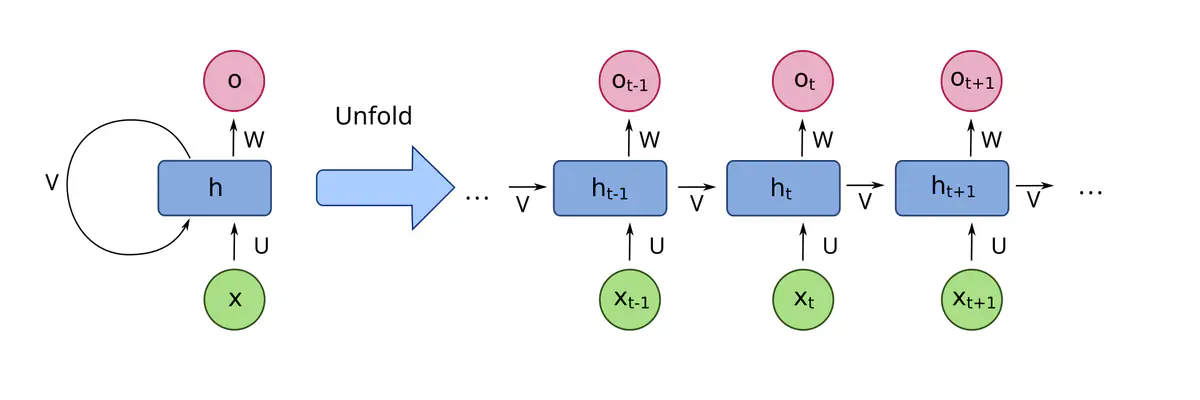
Rather than training a looped model from scratch, which Z.ai says still trails ordinary models at the same compute budget, the lab converted its pre-trained GLM-5 base through continued training. It made three changes to make that work at 750B scale:
- Per-token gates. Simply overwriting the hidden state on each loop made activations blow up. GLM-5.4 learns a gate per token and per pass: the first pass writes small updates and builds context, the second writes fuller updates, and harder tokens get bigger first-pass updates.
- A hybrid KV cache. Keeping a full key-value cache for every pass would multiply memory. The second pass reuses the sparse cache selected in the first and keeps only a local sliding window of its own, so the extra loop costs one window of cache rather than a full copy. Z.ai says this keeps serving costs at a 1M-token context close to GLM-5.3’s.
- Shared sparse-attention indices. The second pass reuses the attention indices chosen by the first pass’s indexer, which Z.ai says performs almost identically to recomputing them.
What the evidence shows so far
The only controlled results Z.ai publishes come from a 30B model with the same architecture as the 750B base. With identical parameter counts and about 10% more training compute, the looped version improved across benchmarks, with the largest gains in math, science reasoning and long-context tasks. Average output length fell by 10 to 14% on tests such as GPQA-Diamond and MMLU-Pro, which Z.ai reads as reasoning moving from visible tokens into the loop’s hidden depth. MarkTechPost notes the smallest gain was on the IFBench instruction-following test, from 50.20 to 53.47.
The “2T to 3T parameter” claim for the flagship has no published numbers behind it, and Z.ai itself flags a weakness: the model tends to get stuck in very long “marathon thinking” loops. Until full benchmark results or independent leaderboard entries appear, GLM-5.4’s standing against other frontier models is unverified.
How it compares with GLM-5.3 and Inkling 2 Mini
GLM-5.3, released in August, is a 753B mixture-of-experts model with open weights on Hugging Face and a 1M-token context. GLM-5.4 keeps that base but changes how it runs, and for now gives up the open weights and public API that made GLM-5.3 easy to adopt.
Inkling 2 Mini takes the same architectural bet from the other end. It is a 26.4B open-weight model under Apache 2.0 that reuses its middle layers three times and runs on a 32GB Mac. Two labs shipping looped models in a week suggests depth through repetition is becoming a practical alternative to adding parameters. For the longer story, see our history of looped transformers.
What to watch next
- A full benchmark table for the 750B model and independent leaderboard results.
- The public API launch and its per-token pricing.
- A date and license for the promised open weights.
- Whether Z.ai’s “significantly larger” next model, which it says is coming soon, also uses loops.
- Whether other labs adopt looping when converting existing base models.
Key takeaways
- GLM-5.4 loops 28 layers of Z.ai’s 750B GLM-5 base twice per token, adding depth without new parameters.
- It is available only in Z.ai’s Coding Plan, ZCode and Z.ai Chat; the API is “coming soon” and weights are planned after safety work.
- Published evidence comes from a 30B ablation; the claimed 2T-3T-class quality is not yet backed by flagship scores.
- Per-token gates, a hybrid KV cache and shared attention indices keep serving costs close to GLM-5.3’s.
- Z.ai says the model can over-think, getting stuck in long reasoning loops.
Frequently asked questions
What is a loop transformer?
It is a transformer that runs a block of shared-weight layers several times per token instead of once. That makes the network effectively deeper, which helps reasoning, without increasing the number of parameters.
Is GLM-5.4 open source?
Not yet. Z.ai says it plans to release the weights after safety hardening but has not given a date or license.
How can I use GLM-5.4 today?
Through Z.ai’s GLM Coding Plan, which starts at $18 per month, the ZCode desktop app or Z.ai Chat. A public API is listed as coming soon.